Monday, 30 May 2022

AATITUDE TO ANIMALS

Animal free now - the big top circus tent


The only thing on at the theatre was Murder on the Orient Express, which I had seen twice at the cinema so I knew what happened. Agatha Christie works better if you do not know whodunnit so, despite having the excellent Henry Goodman as Poirot, I gave it a miss and decided to go to the circus instead. I like to go to a live performance about once a week; it was just a short walk away and so I coughed up my twelve pounds and went along.


The last time I had been to see a circus must have been over half a century ago and my memory of it is inevitably hazy. What had changed in the meantime was our attitude to animals. Today it is considered unacceptable to exploit animals by using them in circuses where they perform for the public who gawp at the way they do human things and seem to threaten the lives of performers who put their heads into the mouth of a lion or tiger. 


It is certainly hard to argue in favour of animal cruelty and there is definitely something exploitative and undignified about elephants on tiptoe, which has now ended, leaving the human performers to keep the circus going without any help from animals. Before we celebrate, however, I want to know what happened to those animals who were released from the humiliation of performing in public. Did they just end up being sent to the abattoir? 


In our haste to free these same animals from performing in public, are we in effect abolishing them altogether? I have the same reservations about vegetarianism. We are often told that eating animals is an “inefficient” way of using the land and we could certainly feed a bigger population if we adopted a vegetarian – and eventually a vegan – diet. But this cutting out the middle man (or creature) must result in more people and less animals. Is that what we want?


Societies that adopt vegetarianism tend to be ones which are densely populated – India, Ireland in the period leading up to the potato famine, when the population was well above what it is today (eight million as opposed to six million) and, controversially, Nazi Germany. Of course, the Nazis did not give up meat universally but I am convinced that Hitler, who adopted a vegetarian lifestyle, considered a meatless world an essential part of lebensraum.


This literally means “living space” and was how he envisaged a future for a Germanic people who would dominate the world and eliminate all the unnecessary and inferior peoples – Slavs, the disabled, homosexuals, gypsies and Jews – who were occupying space that would be used by pure Aryan stock. Animals would eventually follow these people into oblivion. The difference between Hitler and a sentimental vegetarian is that he was honest about it.


My own daughter and several others in my family are vegetarians and my brother and his wife are moving towards a vegan lifestyle now. I do not love them any the less because I disagree with their choices – and I certainly think that we eat too much meat in our society – but I wonder what the future is for animals once we cease to eat them. Vegetarian societies certainly do not seem to be ones in which animals and humans live in peaceful harmony.


It is a long way from Nazi Germany to a visit to a modern circus which has to manage now without animals. The human performers certainly gave it a go. They performed magic and acrobatic tricks, made jokes, brought in a clown who encouraged the many children in the audience into making lots of noise. The ringmaster gamely played his part but I had the feeling that something was missing and that was the non-human element in the event.


A similar thing happened on a smaller scale on a visit to Osborne House on the Isle of Wight recently. I had been looking forward to see the horse and carriage that took us down to the Swiss Cottage but this had been replaced with a minibus. The new vehicle is quicker, more efficient and cheaper than a horse-drawn carriage but what has happened to the horses meanwhile? They have been abolished and another small step in human control is taken.


When – eventually – we decided to abolish slavery it was necessary for former slaves, who had previously been considered the property of their white owners, to find a new role as freed people. It would be stupid to say that this has been plain sailing since then but enough black people have prospered, such as politicians like Barack Obama and sportsmen and singers like Marcus Rashford and Aretha Franklin, to show that such a thing is at least possible.


There does not seem to be such a hope for animals who are destined for a one-way trip to the abattoir once they do not have a role either entertaining or being eaten by humans. This is the fundamental difference between racism and what is known as speciesism, the belief that some species are inevitably superior to others. It is up to those who refuse to eat or be entertained by animals to find a role for them that allows them to survive and even prosper.


There is precious little sign of that happening at present. While the short, cramped and uncomfortable life of a battery chicken may not be worth preserving, that of the performing animal might have been kept going if we had not been so absolutist in wanting to abolish all trace of it. It takes a lot of time, money and effort to feed and care for a large animal and there is little likelihood that anyone will do this if there is no economic reason for it.  


So what happened to the animals that used to perform in the circus or take the children on a carriage ride? Put down I bet, for the sake of a misplaced compassion. That is just another way humans have found of dominating the planet for themselves.


My other blog is diaryofatouristguide.blogspot.com


Edwin Lerner


Friday, 29 April 2022

ABSOLUTE OR ABSENT

Varah190.jpg
Chad Varah, founder of The Samaritans
(Photograph downloaded from Wikipedia)

As I have already written in a previous post (which you can read here) one of the things I have been doing with my time recently is to answer the telephone for The Samaritans, an organisation that provides a free listening service for people who are unhappy, and are suffering from depression or desperation, many of whom might be on the verge of committing suicide.


One thing I learned was that we are not supposed to use the phrase “commit suicide” when doing a Samaritans shift. (Each lasts three hours and you are expected to do one a week.) Since suicide was decriminalised in 1961, the phrase has gone out of fashion and we are meant to say something like “end - or take - your own life” instead. 


This seems like the ultimate euphemism to me. “Suicide” is obviously a word that cannot be avoided when talking about taking your own life and “commit” is a simple English word which basically means “do”. If you cannot talk about doing something which, virtually by definition, you are talking about as a Samaritan, then we have come to a pretty pass.


However, rather than making a fuss about wokeness of political correctness, I have quietly shelved the phrase and use ones that are considered more acceptable these days. Chad Varah, who founded The Samaritans in the year I was born – 1953 – never shied away from saying “commit suicide” but I will obey the dictates of head office and drop it now for good.


However, I have my doubts about the issue of confidentiality which is paramount for all Samaritans. Although I can say that I am a Samaritan, I cannot write about particular people I have talked to and certainly will not boast that I persuaded Charles not to end his life or talked Clarissa into thinking that life was worthwhile after all. (Their names are invented by the way.)


Under the Samaritans code of confidentiality, conversations remain secret between the caller and the listener. It helps people to open up if they know that I will not blab about them to someone else after I have put down the phone. I debrief at the end of each session so a Samaritans leader hears what I have to say but then I shred my notes and go my way.


Yet confidentiality can come into conflict with safeguarding, the duty to protect people from sexual exploitation. If a caller tells me that they have raped their daughter (God forbid) then I have to warn them that I will need to report this to the authorities. There is no need for a caller to identify themselves, however, so there is little Samaritans can do if they refuse.


The whole issue of safeguarding has an element of covering your back, showing that you will reveal the details of a terrible crime without forcing the criminal to identify themselves. This means that, by keeping his (usually) identity secret, he can unburden himself without having to face the legal consequences of his confession. You cannot charge if you cannot identify.


There is a contrast in the degrees of confidentiality offered by a Samaritan and a Roman Catholic priest in the confessional. The sanctity of the confessional is absolute as is demonstrated by a Catholic priest here So you could confess to being the Yorkshire Ripper and not be betrayed by the priest as you are talking to him (always) in total confidence.


The same degree of absolute confidentiality does not apply to Samaritans. Not only does the safeguarding policy exist to protect children and other vulnerable people, but Samaritans will obey a court order to reveal the identity of a criminal. If I am “required by law” my duty of confidentiality can be suspended. Not so for a Roman Catholic priest.


This actually happened when a killer confessed to his crime to Samaritans no less than forty five times. The forty sixth listener, however, felt that he could not keep the secret and told the police who then apprehended the killer with the co-operation of the local branch. They effectively caved whereas a priest would have held out and kept the confession confidential.


Which is the correct approach? To maintain total confidentiality so that people can feel safe in confessing and unburden themselves or to put the protection of an innocent person first? This is an extremely difficult question to answer and I will probably be accused of hedging my bets when I say that each approach is probably right for the organisation concerned.


Whether you agree with the premise or not, a church will distinguish between a crime, which society judges and punishes you for, and a sin, which may be perfectly legal but goes against what God allows. Being unfaithful to a spouse is not a punishable crime but it is wrong in the eyes of the church and should be owned up to as a sin in the confessional.


Although it was founded by a priest, The Samaritans is a secular organisation and volunteers are forbidden from preaching the gospel to callers, who do not want to hear that God loves them, even (especially) if nobody else does. The Samaritans are concerned with life on earth and what happens in Heaven (or Hell) is not going to be uppermost in their minds.


For believers, however, God is the ultimate judge. They are released from the confessional with the words, “Go and sin no more”. Of course, people go on sinning (and confessing) but you have owned up to what you have done to God and can expect absolution from Him. What that means to society is not the concern of the person hearing your confession.


The Samaritans cannot expect to play this get out of jail free card. They have to think of the loved ones of a child who has been abused or killed and may be obliged to act in such a way that at least seems to be protecting the child from further abuse – or even worse. Therefore they impose limits on confidentiality so as not to be complicit in harming innocent people.


Remember this if you want to call The Samaritans to make a confession of having killed or abused someone. A Roman Catholic priest will offer you a greater degree of confidentiality so you may be better off telling all to him than to a secular Samaritan. They do not offer total secrecy and you could argue that, if confidentiality is not absolute, it is absent.


Edwin Lerner


My other blog is diaryofatouristguide.blogspot.com

Thursday, 31 March 2022

THE STATE HAS NO CONSCIENCE

The ubiquitous yellow and blue flag of Ukraine

What is the connection between Vladimir Putin's invasion or Ukraine - for it is very much his project - and the Post Office scandal in which many sub post-masters were unjustly convicted of fiddling the books by a faulty computer system? It is that you cannot expect the state to control matters with fairness and decency. The state itself is neutral and has no conscience.

This is what struck me about the Post Office scandal. And it is a scandal. Hundreds of sub-postmasters were cut adrift by an organisation they would have expected to back them up. A faulty computer system was installed and they were forced to take the blame when money went missing despite it obviously not being their fault. Many paid with prison sentences, broken marriages, bankruptcy and even suicides. And what punishment did the bosses get? Nothing.

The magazine Private Eye backed up the sub-postmasters but there was a deafening silence from Fleet Street and the mainstream media until the brown stuff hit the fan, when they showed a belated interest. There were no big names or celebrities attached to a high profile campaign in their favour and nobody seemed to care about them except for an independent magazine.

Thank God for a free press. No such thing exists in Russia, the last non-state controlled television station having been closed down and journalists facing fifteen years in prison for even calling Putin's invasion of Ukraine a 'war'. A few thousand brave souls have gone out onto the streets to demonstrate but they can expect little mercy from the justice system in Russia.

Putin and his wife wedding photo

I blame divorce for a lot of the problems with Putin. He ditched his first wife ten years ago and has not replaced her but had various mistresses since. There is no-one at home to say to him, "Vladimir, this invasion of Ukraine is a stoopid idea which the Russian people do not want, I am sure. Mark my word, it will end in tears." Advisers cannot afford to talk with that sort of honesty.

Putin has surrounded himself with flunkeys and yes men. One columnist wrote that, if he was an advisor to the Russian president, he would think very carefully about what advice he gave to him lest he incur his displeasure. There is something ironical about a country that promotes the idea that the state is all-powerful being run by one man whose whims are like laws of iron while the west, which promotes the individual, relies far more on a group acting together.

We are between a rock and a hard place with Putin. If we provoke him too much, there is a real chance he will unleash nuclear weapons. If we cave in to him, he will simply continue with his aggression until we belatedly try and stop him. Think Hitler and Chamberlain, whose reputation has been partially rescued by Robert Harris and the book he wrote about the Munich agreement. We may call it 'a piece of paper' but it bought us an extra year before war inevitably arrived.  

'War' was inevitable once Putin decided to take over Ukraine to stop it falling into the hands of the west. He may not want me to call it that but I am not facing fifteen years behind bars for doing so. Try telling the parents of the children killed by Russian missiles that they are not engaged in a war. Try telling the Russian soldiers killing, being killed or surrendering.

The only hope is that, when the body bags start returning to Russia with the corpses of young soldiers inside them, the people of Russia will turn against Putin and he will have lost so much support that the end is inevitable. A tyrant is only as strong as the support he enjoys in his country and it is not the intellectuals who will bring down the dictator but the ordinary people.

Will that happen or has Putin's grip on power become so strong that the opposition has been effectively neutralised? Putin shows no hesitation in locking up or murdering those who oppose him and his strength and ruthlessness probably attract enough support for him to survive for the time being but, if his Ukraine invasion fails completely, things may change and do so quickly.

Putin got away with invading Chechnya and virtually flattened the country in subduing it. Russia, however, did not succeed in Afghanistan and its failure there effectively led to the collapse of state run communism to be replaced by a kind of state sponsored kleptocracy. Which way will it go in Ukraine? Most Ukrainians seem to want the freedoms of the west but Putin And Russia want to keep them in the east. At present it does not look good for the eastward facers.

I will not mourn Putin if he is a victim of his own ambition. Russia does not have much of a democratic tradition and seems to prefer being ruled by a strong man. Every strong man, however, has his limitations and I do hope that Putin overreaches himself and falls with an almighty crash to earth (or beneath it). We shall see how it pans out. Watch this space.

Edwin Lerner

My other blog is diaryofatouristguide.blogspot.com


Monday, 28 February 2022

THE NEED TO FORGIVE

Paul Ince - saved by football

The now retired footballer Paul Ince once said that, if it had not been for football, he would have probably ended up in prison. He came from a deprived background, ran with a rough crowd and, being black, he could not have expected favourable treatment from the justice system. Football, however, gave him direction and kept him straight.

Good for football, most people would think. People of colour often find that they stand their best chance of succeeding in life through sport because, being largely a meritocracy, they suffer less from discrimination than in other areas where prejudice holds them back. There is no shortage of racism in football but coaches who select teams simply cannot afford to be racist because so many top players now are black. Black former players are now moving into coaching, as Ince has done, albeit with painful slowness.


I use Ince as an example because any crimes he might have been tempted to commit would probably have been financial – robbery, drug dealing, burglary, etc – and not of a sexual nature. I am not saying that he is a saint in sexual matters. Like most young footballers he was probably tempted and may have fallen once or twice.


Other footballers have been tempted and caught taking advantage of their position as alpha males. Their crimes are unsavoury and I have no intention of defending them. What I think, however, is that they need to be allowed to re-enter society once they have served their punishment. If they do the crime they have to do the time but, once that has been completed, they have the same right to rebuild their lives as those found guilty of stealing money from old ladies or breaking and entering. 


Yet forgiveness seems to be in short supply when it comes to sexual crimes. Partly because it is such a horrible act and partly because it has been (and still is) so easy to get away with, rape is seen as the unforgivable crime. Those deemed guilty of it are cast into outer darkness and cannot be admitted back into normal society.


I have said before that one of the main reasons that it is so hard to gain a conviction for rape is that it is a crime that, almost by definition, takes place without witnesses who can corroborate one person’s story. Therefore, it tends to come down to one person’s word against another’s. That introduces doubt into the process and, inevitably, the accused tends to be given the benefit of this doubt. Add the sheer horror of undergoing cross-examination in court and many women are reluctant to even report instances of rape. 


This has resulted in the rise of settlements of the type used by Prince Andrew and his team of lawyers when he was accused of sexual exploitation by Virginia Guiffre (then Roberts, one of the many young women groomed by the sex offender Jeffrey Epstein and offered up as gifts to men like Prince Andrew, whom he wanted to cultivate with “free’ sex.


This sex, of course, turned out to be anything but free. The prince denied even meeting his accuser but was not willing to go to trial. He was probably advised that she would be the one to benefit from any doubt around this case. The temptation to give a bloody nose to a privileged British royal might have been overwhelming for a jury in republican America so he settled and is now supposedly in the clear as a result.


Except that 'the clear' is anything but from now for a man accused of rape or sexual exploitation and who chooses to settle. A Scottish footballer called David Goodwillie was ordered to pay a woman who had accused him of raping her. He was not convicted of any crime but she sued him in a civil action and the judge ordered him to pay her the not inconsiderable sum of £100,000. That may seem like loose change for a big-time player but not for a lesser one like Goodwillie.


The incident in which he was accused of rape took place in 2011 when he would have been about twenty one. That is not an excuse – both accused and accuser were above the age of consent – but it does show how mistakes you make as a young man can come back to haunt you years later. The writer Val McDermid, who supports Raith Rovers, withdrew her sponsorship of the club after they signed Goodwillie.


McDermid said that the sight of Goodwill playing for her team made her 'sick to the stomach'. This seems to say that there is no way back for a man deemed to be a rapist. His previous club Clyde had said that he was entitled to rebuild his life after the court had ordered him to pay for what he had done to the woman who accused him. He had a good career there and was mostly left alone until he signed for Raith and McDermid had her say. Then all hell broke loose.


Men accused of rape do not help themselves by failing to show remorse for their acts. However, showing remorse is akin to admitting guilt in the eyes of a lawyer and they are probably discouraged from doing so as a result. This reluctance to admit guilt is probably increased by the intransigence of women like McDermid who seem determined to deny them a chance to rebuild their lives. They act as though Goodville and his like should be cast into outer darkness forever. 


Yet, if we are not to condemn all men deemed guilty of rape to a life sentence without parole, they have to return to society sooner or later. I use the word 'deemed' deliberately, as Goodwillie was never convicted of a crime, but judged responsible for a rape by a judge. Whatever happened with him and with Ched Evans, with Prince Andrew and Marvin Greenwood (who also faces charges of rape) there does not seem to be any way back for them once “deemed” guilty.


But every criminal who will be released needs to have the chance to rebuild their lives after they get out. Raith Rovers would surely not have cancelled the signing of Goodwillie if he had been found guilty of burglary, had gone to prison and then gone straight. Why should sexual crimes be treated differently to other ones? 


Edwin Lerner


My other blog is diaryofatouristguide.blogspot.com

Monday, 31 January 2022

THE MEDIUM AND THE MESSAGE

Neil Young - an early photo from the 1970s
(By Mark Easterbrook from WikiCommons)


I remember talking to someone who turned out to know what he was talking about.  He said that vinyl would outlive the compact disc. I pshawed the idea, sure that the convenience of those small CDs would prove more useful in the long run than the more cumbersome vinyl. It now turns out that that he was probably right. The geekiness of music collectors who prefer vinyl and the arrival of streaming have combined to isolate old-fashioned CDers like me, who want to be able to touch the medium we listen in. CDs, like us, may survive for a bit but not for long.


Neil Young and Joni Mitchell are two singers who I grew up with and whose CDs I have, as well as their songs on vinyl and cassette. Artists like Young and Mitchell now depend on streaming and new artists cannot become established without it, the ultimate democratic medium.

Spotify is the main streaming company these days. It started in Sweden in 2006 with very good intentions - diversity, inclusion and so forth - but has rapidly become a huge business with about 6,000 employees, offices all over the world and an annual revenue measured in billions of dollars. Their main dispute now is with artists over how much they should pay in royalties. 


Spotify also makes money from podcasts and one of their biggest earners is Joe Rogan who signed a contract worth $100 million with the company and has a large number of loyal listeners prepared to cough up enough to fund his lavish lifestyle. (He is based in California, as are Mitchell and Young.) This involves him promoting what is often called 'misinformation' in which verifiable truth is well behind what appeals to people's prejudices. One of his guests was Alex Jones, who says that the Sandy Hook shootings were staged in order to impose gun control on Americans and has been successfully sued by the families of those who children were killed.


Now Neil Young – followed by Joni  Mitchell – is objecting to having to share a platform with Rogan. He has told Spotify that ‘you can have Rogan or me – but not both’. Unsurprisingly, the company opted to stay with their popular podcaster instead of a couple of aging rock stars. Young and Mitchell have moved and Rogan has stayed on Spotify, which has tried to keep them all happy and has promised to weed out any 'misinformation' but has found that protecting free speech means making money even (especially?) if that speech involves spouting utter rubbish. 


I have never listened to Rogan and have no time for the ideas he promotes. I got Covid jabs as soon as I could, test myself about once a week (always negative) and still listen to my Neil Young and Joni Mitchell CDs occasionally. Yet, I am not in favour of taking any of them off Spotify. They all contribute something and should be heard by all their various fans.


This is a classic example of freedom of speech versus the fight against misinformation. People who think that vaccines save lives are keen to promote the idea against those who think that they have been introduced in order to control the people. Edward Jenner was a pioneering scientist who introduced vaccines in England in the eighteenth century and they have saved millions of lives since then by protecting people against small pox, polio and other illnesses. He was a rebel, pioneer and experimenter whose work is now accepted by most of the world.


Except for those who think that vaccines are evil incarnate and were designed to control and manipulate us and will believe almost anything in support of their idiotic conspiracy theories. Let them think that way if that is what they want. I would probably not be much good at stopping them and find it almost impossible to have any sympathy for those who refuse vaccines and get sick, sometimes asking to be injected when it is already too late to save them form their stupidity.


Rogan once said he would endorse Bernie Sanders for US president because he had always been ‘consistent’. Young probably feels the same way. In a way, they are similar, both perfectionists who think that solutions to the world's problems are easy to identify and put into practice.  In fact, solutions to our problems are often difficult. They involve disagreement, debate and discussion, which are the mainstays of democracy. This means allowing people to talk rubbish because it suits their mindset not the facts. Allowing people to believe 'pizzagate' theories - that the world is controlled by a well-hidden and secretive elite of paedophiles.


This is not to say that you can say anything you like. There are laws to protect minorities, mainly but not exclusively ethnic ones. If you promote hate speech, you may find yourself being prosecuted. I agree with this although we should err on the side of caution when it comes to restricting ideas. I would, for example, like to be able to hear a well-balanced argument in favour of racial discrimination. Not because I agree with it, but because I want to hear it. And to refute it.


The crux of the problem, as far as Spotify is concerned, is whether it should be neutral or partial. Should the medium control the message? Should people be free to tout any ideas they want and see which ones take hold or are companies that allow freedom of speech responsible if that leads to widespread misinformation that ought to be taken down? Moreover, who decides what is misinformation and should be controlled and, effectively, censored, and what is not?


No-one is suggesting that we should ban books because it leaves people free to write rubbish. Yet the character of a company determines who it gives shelter and space to. Is it compatible to have Neil Young and Joe Rogan on the same platform? Young thinks not. Rogan and Spotify are quite prepared to share space with him. Let them all speak and then make up your own mind. Sure, some people will believe anything that fits with their views rather than what is true. Better to let them think what they want and argue dispassionately and convincingly than to try and prevent them from thinking that way in the first place. Freedom should triumph over censorship.


Edwin Lerner


My other blog is diaryofatouristguide.blogspot.com


Friday, 31 December 2021

BLACK, WHITE AND GRAY

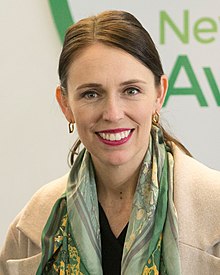
New Zealand Prime Minister Jacinda Ardern in 2018.jpg
Jacinda Arderrn, New Zealand
Prime Minister, a country on the
point of banning cigarette buying

New Zealand has gone too far.  That is not I thought I would ever write, thinking of the land of the Kiwis as being a sensible, even slightly dull, country.  Yet the country's government is now proposing a ban on people buying cigarettes.  The law has not been passed yet - and I hope it never is - but it proposes to stop people buying tobacco products if they were born after 2008. 

But not everywhere.  For simplicity I divide substances we consume into black, white and grey:


Why am I opposed to this move when I only ever smoke an occasional cigar and have not done so for months?  If all the tobacco in the world disappeared tomorrow (which is what happened in the film Yesterday, along with the Beatles’ songs) I would not be that worried and, although I was sceptical at first of its value, I accept and agree with banning smoking in pubs, restaurants, etc.


1.     Black ones are obviously and immediately toxic, sometimes poisonous, things like cyanide and sulphuric acid, and access to them needs to be strictly controlled for the sake of safety.


2.     White substances are harmless and usually nutritious, food and drink essential for the continuance of life – things like water, basic foodstuffs and oxygen.


3.     Grey substances come last, things we do not absolutely need to survive and which will not kill us immediately but often provide pleasure, yet can also be dangerous and addictive.  

You can classify everything into one of these categories.  Sugar, for example, is grey.  Human beings can – and have – managed without it but many people (myself included) have a sweet tooth and, as the song goes, a spoonful of sugar makes the medicine go down.  Yet too much sugar can make you obese, cause your teeth to rot and can possibly cause cancers.


No-one is suggesting that we ban putting sugar in tea or coffee, yet most of us accept that it is a good idea to discourage people from consuming too much of it.  Hence government advertising to that effect.  Likewise alcohol.  People ruin their lives by drinking too much but that is not considered a good reason to stop me enjoying a pint of beer, a glass of whisk(e)y* or wine..


The one attempt by a country to ban alcohol completely - Prohibition in the USA, which lasted from 1920 to 1933 - is usually accepted as a failure now and actually contributed to the problems caused by drink by encouraging people to consume badly made and unpurified booze because there was no legal control over the production and sale of it.  If it is illegal in the first place there is no way that you can stop the bad stuff being produced and sold.


A similar process is happening with soft drugs now, which are gradually being decriminalised in many countries.  The UK lags behind in this process, so scared are the politicians of alienating those newspapers, such as The Daily Mail and The Times, which are dead set against legalising it. The British government is denying itself tax revenue and encouraging crime as a result.


Politicians regularly use drugs – residues of cocaine have been detected all over the Palace of Westminster (see here if you doubt this) and a senior figure like Michael Gove has admitted using it – yet they do not allow others to consume it legally and propose ever more draconian punishments for recreational drug users.  The blatant hypocrisy is almost breath-taking.  Don’t do as I do, but do as I say instead in the usual formula.


I believe that all drugs should be in classed in the ‘grey’ area.  Whether you take sugar in your tea, enjoy a drink and/or a smoke or inject yourself with mind-altering substances is up to you as an individual and not up to the state.  What you do when you drink, smoke or take drugs, however, needs to be controlled by legislation.  So you cannot drink and drive, smoke near others or operate machinery if you are high, or your concentration is lessened, in any way


The other side of the coin of allowing people to decide whether or not they consume these ‘grey’ substances is that they then have to take responsibility if the harmful side-effects come through at a later stage.  If you develop lung cancer or sclerosis of the liver because you have smoked or drunk too much, that is not the fault of the person or company that sells you the stuff but your fault for buying and consuming it in the first place.


Buyer beware.  We have all heard the phrase and warnings are plastered on the side of cigarette and cigar packets these days, so no-one can be unaware of the dangers of smoking.  Likewise drinkers are encouraged to ‘Please Drink Responsibly’, that ‘please’ presumably being put there as the drinks industry attempts to keep the code of restraint voluntary, rather than prohibitive, as it has long been for tobacco.


In the USA it is fashionable to sue tobacco companies for selling a product that is addictive.  This results in the absurd situation of executives denying the obvious - that tobacco is addictive - in order not to admit to peddling something potentially dangerous.  Yet all grey substances can be addictive for the simple reason that they provide pleasure.  If an individual decides to go ahead and smoke/drink/take drugs that is their decision and suing a company for enabling them to do so is merely passing the buck.


Government prohibition of tobacco is now set to become absolute in New Zealand, the reason being that people from indigenous communities (Maoris) still smoke heavily and need protection from the evils of tobacco.  Yet, by removing the voluntary element from the inevitable reduction of consumption, the country’s government is now trying to move tobacco from the grey to the black category.


I am sure this is wrong. Cigarettes do not kill everyone who smokes.  Healthy people can die from cancer, which is notoriously random in the way it strikes. Sometimes those who abuse their bodies lead long and even healthy lives until they inevitably die  Let them have some fun on the way in their consumption of the grey stuff – as long as they take responsibility for doing so.  


* Whisky is from Scotland. Whiskey comes from the USA, Canada or Ireland, where I am writing.


My other blog is diaryofatouristguide.blogspot.com 


A HAPPY NEW YEAR TO ALL READERS WITH HOPE FOR A PANDEMIC FREE 2022


Edwin Lerner

Tuesday, 30 November 2021

A CATHOLIC CHRISTMAS


James Ussher, Bishop of Armagh
(who calculated dates in the Bible)

We will be in Ireland for Christmas this year, so it will probably be a Catholic event.  By one of those quirks of history The Church of Ireland is Protestant while the older Roman Catholic church uses more modern buildings.  Catholics were second class citizens in Ireland for centuries and were not allowed to build their own churches.  Now the boot is on the other foot and, in the South at least, Roman Catholicism is in the ascendancy.  


That is not to say that the Catholic church does not have its problems.  While the Anglican church seems to have plenty of applicants for the priesthood – particularly since they have started accepting women – the Catholic church has been beset by sexual scandals and is having difficulty attracting men to become priests, particularly as they are still expected to embrace celibacy in an increasingly sex-obsessed age.


We now know that for years Catholic priests satisfied their sexual urges by exploiting children they had power over and could enforce silence from.  Victims of exploitation, however, will not keep quiet any more.  Neither will loyal Catholics turn a blind eye to the ‘housekeepers’ who helped priests satisfy their all-too human needs.  It is no longer a case of ‘hate the sin, love the sinner’ but ‘hate the sin, expose the sinner’.  


Anglicans today are having problems getting people into their congregations while Catholics find it difficult to find men (exclusively) who are prepared to lead their services.  It might make sense to combine the two churches but common sense and religion are not comfortable bedfellows and the tendency as religion declines in importance is for the greater fracturing of churches rather than greater unity.


Faith, of course, is not based on reason.  The very word implies accepting something which cannot be demonstrated.  I have a friend who is trying (unsuccessfully) to turn me into a Jehovah’s Witness.  His faith leads him to believe that the Bible is literally true and that one day we will live in a world of plenty rather than the one we are stuck with, which is beset by war, famine and climate change.


There was not always this huge gap between science and religion.  Men like the monk Gregor Mendel and the parish priest Gilbert White used their thinking time and powers of observation to make great scientific discoveries.  Even Charles Darwin was set for a career in the church until evolution got in the way.  Together with the geologist Lyell, he showed that the world was much older than the Bible said it was.


Another priest, the Irish Protestant Archbishop James Ussher, calculated the age of the earth in the seventeenth century and showed that God had created the world at around six o’clock in the evening of the 24th October 4004 BC.  I hate sneering at the past, by the way.  Ussher’s was at the cutting edge of scientific knowledge at the time and was the Charles Darwin of his day, even if his exactitude seems charming but unrealistic now.


However, you can still find people who believe that the world is just six thousand years old, rather than the four to five billion which the scientific evidence shows it to be.  There is little point in arguing with them.  Belief like this is not based on scientific measurement but on acceptance and no more amount of logic will shake it.  And churches built on blind faith gain more converts than those that accept science. 


I think it is a shame that science and religion are now considered enemies rather than allies.  Samuel Coleridge Taylor, who was himself a preacher in the newly created Unitarian Church, said that intelligence was being able to hold two different ideas in your head at the same time.  He also gave us the concept of ‘suspension of disbelief’, the knowledge that something is false but also that it holds a truth inside it.  


We know when we go to see a play that the person on the stage is an actor who lives in Hampstead or Hackney (more likely these days) who has a mortgage to pay and possibly a family to support.  He or she is portraying the Prince of Denmark or the Empress of Egypt and we accept that fact and are transported into another world by the power of Shakespeare’s words and by the actor’s performance of them.


Something similar is needed for us to embrace religion.  I enjoy singing hymns, reading the Bible and taking communion at church services, not because I believe that the belief system embraced by Christianity is true but because it is good.  This is a way to lead to lead your life that is worthwhile, not an accurate version of how the world – and the universe – was created thousands, millions or billions of years ago.  


So, I will continue to cling to a doubtful, sceptical kind of religious belief, not one which provides all the answers.  Science does not provide a reason to get out of bed in the morning, it merely answers factual questions.  While I do not want to ignore or reject the answers given by science, neither do I want to base my life on them.  So, I will stick with the sensible church rather than one based on faith alone.


May you have a joyful and - maybe just a slightly religious - Christmas this year.  


Edwin Lerner


My other blog is diaryofatouristguide.blogspot.com