Tuesday, 29 June 2021

COMMUNISM AT THE CINEMA


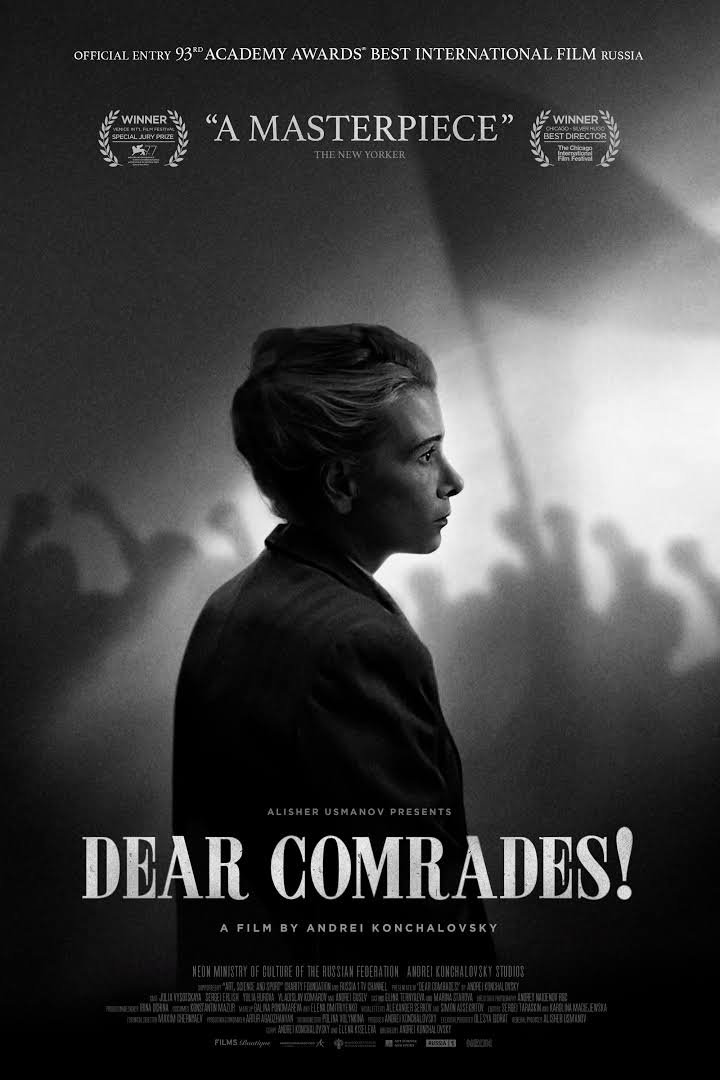
Two recent films were set at the height of communism in Russia: Dear Comrades! and The Death of Stalin. The first has just come out, although it does a good job of looking dated, made in black and white on a small screen, as though it originated in 1962 when it was set.  Armando Iannucci’s film on Stalin came out in 2017 but, being in English and in colour, with recognisable if not major stars, is evidently contemporary.  I avoided it on release as it was advertised as a comedy and I could find nothing amusing about the bloodletting and power scrambling in it.

Stalin died as I came into the world.  No-one is absolutely sure of the exact date of his demise because they were all so scared of him that they did not call a doctor until it was too late to save him. Stalin had in any case had most of the competent doctors in Moscow killed, convinced that they were out to kill him. The date is usually given as 5th March 1953, the day after I was born.

In Russia at the time, an accusation was as good as a conviction and the almost invariable sentence was death.  Although you do not see it happening, plenty of people are dispatched with a single shot to the head, often shouting, ‘Long live Stalin!’ just before they are killed.  You dared not show disloyalty even as you died.  

The cheapness of life also came over in Andrei Konchalovsky’s ironically titled Dear Comrades! set in the town of Novocherkassk, a small Russian town where the people have rise up against the local communist officials when they impose yet another pay cut on top of a price rise and they decide that they have had enough.  They rebel and are gunned down as punishment.

The heroine of the film is a woman who is one of these officials but whose daughter naively believes that she can side with the rebels.  The mother is both more loyal to the system and more realistic in her approach but is reduced to desperately searching for her daughter after the massacre.  She is helped in her search by an oddly sympathetic KGB man.

I will not give away the ending but you wonder if it really happened or was imagined by the mother, so at odds with the previous events in the story it is. The director seemed to be saying that, even in an era of socialist realism, the most loyal and dedicated upholders of a tyranny need an element of wish-fulfilment to survive.

While Ianucci is a British film maker (albeit with an Italian name and parentage, born in Scotland) Dear Comrades was made in Russian by Andrei Konchalovsky, who had a brief unsuccessful transfer to Hollywood, where he found the censorship imposed by commercialism harder to live with than that imposed by communism.  He was fired from Tango and Cash because he did not kowtow to the Hollywood's wish to make a light-hearted buddy cop film.  

Both films show how much the people of Russia loved Stalin, despite his homicidal enthusiasm for killing large numbers of them.  The heroine of Dear Comrades longs for the days of certainty he offered, while the people in The Death of Stalin flock to his funeral – and 1500 are gunned down as they breach the lockdown Lavently Beria had imposed on Moscow.   

Beria, who runs the secret police, comes out as the one utterly evil character amongst a bunch of generally unsympathetic ones in Iannucci’ film, everyone trying to grub their way to power while keeping in with Stalin.  He is portrayed by Simon Russell Beale, an actor I admire but one who normally portrays sympathetic, almost cuddly characters.  In real life, Beria was a rapist and exploiter of women, a man only too happy to carry out his boss’s orders to arrest and kill anyone named on the lists he hands out to his equally enthusiastic underlings.  It is hard to feel any sympathy for Beria when he gets his comeuppance as Khrushchev gets the better of him.

Why was I put off from seeing the film when it first came out, normally being only too keen to see how communism turned so quickly into murderous tyranny, with a strong dose of corruption, privileges being granted to those successful at climbing the greasy pole of the party rather than being good at making money? The film was advertised as a comedy.  While there was a certain black humour in it, none of the characters was remotely sympathetic, something you surely need to really enjoy a film. I was fascinated by The Death of Stalin but did not laugh once.

The film ends with Khrushchev in command but adds that, although he got rid of those who helped him take Beria out, he too fell from power when Leonid Brezhnev took over some years later.  By that time the death sentence had fallen into disuse in Russia and those who fell from power were merely ‘retired’ and allowed to live in their comfortably-appointed party-provided dachas until they died. Nikita Khrushchev’s granddaughter is said to have asked why her grandfather was crying all the time after his fall.  Maybe a bullet would have been preferable.

Watching films like these makes me thankful I live in a democracy in which our leaders never become too powerful simply because they have to – or are expected to – obey the law and we can get rid of them after a few years.  Donald Trump had a lot more in common with those communist leaders than he would ever have admitted but the difference is that the system proved stronger than him in the long run – even if his attempt was an close run thing in the end.

Edwin Lerner

My other blog is diaryofatouristguide.blogspot.com


Sunday, 30 May 2021

SOCIETY'S WASHING MACHINES


Saskia Jones and Jack Merritt - victims of Usman Khan

When David Cameron was asked what would be his priority when he was re-elected as Prime Minister in 2015, he replied simply ‘prison reform’.  Well, that all went south because of Brexit and little more than a year later he was replaced by Theresa May and later by Boris Johnson.  Prison reform was forgotten after Brexit and the anti-reform attitude which went with it.

Another nail in its coffin was the recent inquest into those who were killed on London Bridge in 2019.  Briefly, what happened was that two young idealistic people (photos above) were killed by the supposedly reformed terrorist Usman Khan after attending a rehabilitation meeting at nearby Fishmonger’s Hall.  Khan had been given a clean bill of health and promoted as the ‘poster boy’ for prison reform and the deradicalization of extremists. 

The key word here is ‘extremists’.  There is a world of difference between making criminals feel worthwhile members of society who can make a contribution by giving up crime and persuading those who want to destroy western style democracy and replace it with a version of Islamic fundamentalism to see the error of their ways.  Persuading a crook to go straight is one thing, deradicalizing an extremist is another.

Despite the terrible failure of the idea of reforming a radical like Khan after he has been locked up, it is still worth making the effort.  But it is a tough sell.  There are very few votes in prison reform and nominally radical politicians tend to run scared from issues which they feel will lose them votes and make them look weak.

As is often the case, it is the conservative who effects change because he is mindful of his legacy, as Nixon did when he went to China.  Wouldn’t be cool to go down in history as the man who opened up the communist east to the capitalist west, thought Nixon?  Likewise Cameron may well have thought his administration would look good to posterity if prisons were genuinely reformed during his watch.

I have written before about the need for us to have prisons to make society work, my argument being basically that, once you lock the door of your house you are effectively voting for a criminal justice system.  (Go here for that post.)  However, they should not be, as they so often are, universities of crime, rather the washing machines of our society.

When I buy and use a washing machine I expect it to work.  I put in dirty clothes and take them out clean.  If it does not work, I want my money back or at least the machine repaired.  Similarly, if I support sending people to prison, I expect those convicted and sentenced to come out better citizens than when they went in. 

Some hope.  According to the Howard League for Penal Reform there are nearly 80,000 people in prison in Britain at present and there is little sign of that number going down, especially as the government thinks it can win votes by promising longer sentences - such as ten years for defacing a statue.  The League compares the prison system to a river which sweeps away people stuck in the middle of the flow.

In a sensible system, locking up people convicted of a crime and then working hard to help them turn their lives around would be a cause for celebration.  Look, John or Jane has been inside for five years and came out determined to go straight, find a job, reconnect with their families and leave their criminality behind them. They would become contributors to society rather than a drain on resources.

Prisons can be quite a drain.  We spend about £4.4 billion pounds a year in Britain on prisons (not on the justice system) and each prisoner we lock up costs nearly £45,000 annually.  (You could send them to a decent hotel for that.)  Yet the reoffending rates are shockingly high. Nearly 50% of prisoners who have been released are reconvicted within a year and these rates are higher for young and petty offenders.  The washing machine is not working.

Success stories like the (entirely imaginary) ones of John and Jane are not only rare but are widely mistrusted by those who never go to prison.  Talking to prisoners, as I do occasionally when working as a Samaritan, makes you realise what hopeless places they are, yet the appetite for punishment is increasing all the time and our prison population has almost doubled in thirty years from 45,000 to 83,000.

Many ordinary people are sceptical of concepts like prison reform and rehabilitation.  It is widely assumed that all prisoners have fancy flat screen televisions in their cells and can watch anything they want.  In fact, flat screen tvs are the only kind that are made now and access to a limited number of channels depends on good behaviour.  Yet just say ‘flat screen televisions in prison cells’ and people immediately assume that going to prison is like staying in a holiday camp.

In reality, it is often very difficult to get a job if you have time in prison on your cv.  Timpsons, ironically a company that specialises in locks for people's houses, has instituted a successful programme of employing former prisoners and says on its website that:

'The vast majority of ex-offenders we recruit are extremely loyal, productive, hardworking and make excellent colleagues. Many have been promoted and fully grasped the second chance they have been given. To put it simply, recruiting ex-offenders has been great for our business.'

Rather than regarding them as society’s washing machines in which those who have gone wrong can be cleaned up, we are all too happy to see prisons as the rubbish dumps of society, where people are tossed and left to rot.  Yet, as the Timpson story shows, this not need be the case.  Washing machines or rubbish dumps?  We have a long way to go to convince people that prisons can be the former rather than the latter but it is a step well worth taking. 

Edwin Lerner

Go to: https://www.timpson-group.co.uk/timpson-foundation/ex-offenders/ for more on Timpsons.

My other blog is diaryofatouristguide.blogspot.com.


Friday, 30 April 2021

SAVIOUR OR SO-WHATTER?

Bob Geldof - great fund-raiser for
Africa - but also a 'white saviour'?

Some years ago Somerset was flooded.  It was a wet winter and, being low-lying and next to the Bristol Channel, the area is prone to this.  While the politicians were wading around in wellies and trying to look concerned, the Daily Mail said the people in the area should be helped and the money ought to ‘come out of the foreign aid budget’.  Why are we helping people on the other side of the world when our own citizens are suffering seemed to be the message.

That message has got through to our populist government.  In the wake of Brexit – another v-sign to foreigners - the government has cut the budget it (we, really) spends on foreign aid.  The amount may seem small in terms of percentages (0.5%, down from 0.7% of GDP) but that represents four billion pounds in real money.  And that is not a typo – it is billions not millions, so a thousand times as much.

I have mixed feelings about foreign aid.  Broadly speaking, I am in favour of the better off helping the worse off.  The rich (we, again) can afford it and the poor need it, so why not do a little wealth redistribution?  I have just transferred money to my daughter to help her buy a house.  This will help her achieve her main ambition at the moment, owning her own home, and we are both looking forward to her doing so.  It might be nice if she could do it without my help but I have the money and spending it on her is the best use I can make of it.

Gifts, however, can have unintended effects because they may create a sense of obligation and dependency.  If we are examining motives – always a tricky area – then it is not unknown to bestow largesse as a way of emphasising this dependency, the giver sending a message that he (usually) is doing this out of the goodness of his heart and the taker needs reminding of his place when accepting.

This has always been the main argument against tipping, that it emphasises the gap between the tipper and the tipped, and that this emphasises the gap between the two parties and actually makes it less likely that it will ever be closed.  In an ideal world the person providing a service would receive an adequate reward and should not need to ingratiate him or herself to obtain anything extra just for doing their job.

To which the obvious reply is that we do not live in an ideal world and the tip/aid that is given can make a good deal of difference to the person who receives it and is a small enough amount for the person who gives it to hardly notice.  It is not as though we are getting a tax reduction because foreign aid is going down, and very few people offers tips to those carrying their bags or golf clubs if they cannot afford to.

The phrase ‘white saviour’ (‘savior’ if you are American) is sometimes used to describe and denigrate those who offer help to people in Africa.  Celebrities are particularly vulnerable to this, shown jetting in with their entourages to provide blessings on black children who always display white teeth in smiles of gratitude.  They encourage others to donate and then return to their privileged hideaways.

The problem is that, if people are told to get lost, they do just that – and take their cheque books with them.  Instead of saviours, they become so-whatters (a term I have just invented).  They shrug their shoulders and decide that they are not wanted so it would be better to leave the less fortunate to fend for themselves.  While I realise that a lot of aid goes into corrupt pockets, this cannot be a good outcome.

The phrase ‘white saviour’ (‘savior’ if you are American) is sometimes used to describe and denigrate those who offer help to people in Africa or elsewhere in the developing world.  Even using this phrase to describe countries poorer than ours is considered suspect these days as it assumes that we are better than they aren't just better off.

Celebrities are particularly vulnerable to this, shown jetting in with their entourages to provide blessings on black children who always display white teeth in smiles of gratitude.  They encourage others to donate and then return to their privileged hideaways having done their bit and patted themselves on the backs.

The problem is that, if people are told to get lost, they do just that – and take their cheque books with them.  Instead of saviours, they become so-whatters (a term I have just invented).  They shrug their shoulders and decide that they are not wanted so it would be better to leave the less fortunate to fend for themselves.  While I realise that a lot of aid goes into corrupt pockets, it cannot be a good outcome for it to disappear completely because of western guilt.

In Factfulness, the late Hans Rosling uses statistics to show that the world is actually getting much better.  Girls are being educated and, when they grow up, are having fewer children, making smarter choices about what to do with their lives apart from being perpetually pregnant most of the time.  As well as being educated, people are being vaccinated and it is foreign aid and the western values that come with them which have helped to make these advances.

Whenever we do something good, we always act from a mixture of motives.  Sure, we want to look and feel good, getting a pat on the back and a warm glow for putting others before ourselves.  It is the easiest thing in the world to undermine a good action by adding a bad motive to it.  In the end, though, it is the action that should be judged not the motive.  Otherwise we would all do nothing, afraid of the cynicism of others.

Setting aside a certain amount of your disposable income to help people worse off than you is obviously the right thing to do and nobody should be ashamed of doing it.  So, by all means, encourage people not to take a patronising – and racist – white saviour attitude to those they are helping.  Just realise that this help is often needed and valued and that we should not turn these saviours into so-whatters.

Edwin Lerner

My other blog is:diaryofatouristguide


Wednesday, 31 March 2021

CAN SCOTLAND GO IT ALONE?

Alex Salmond
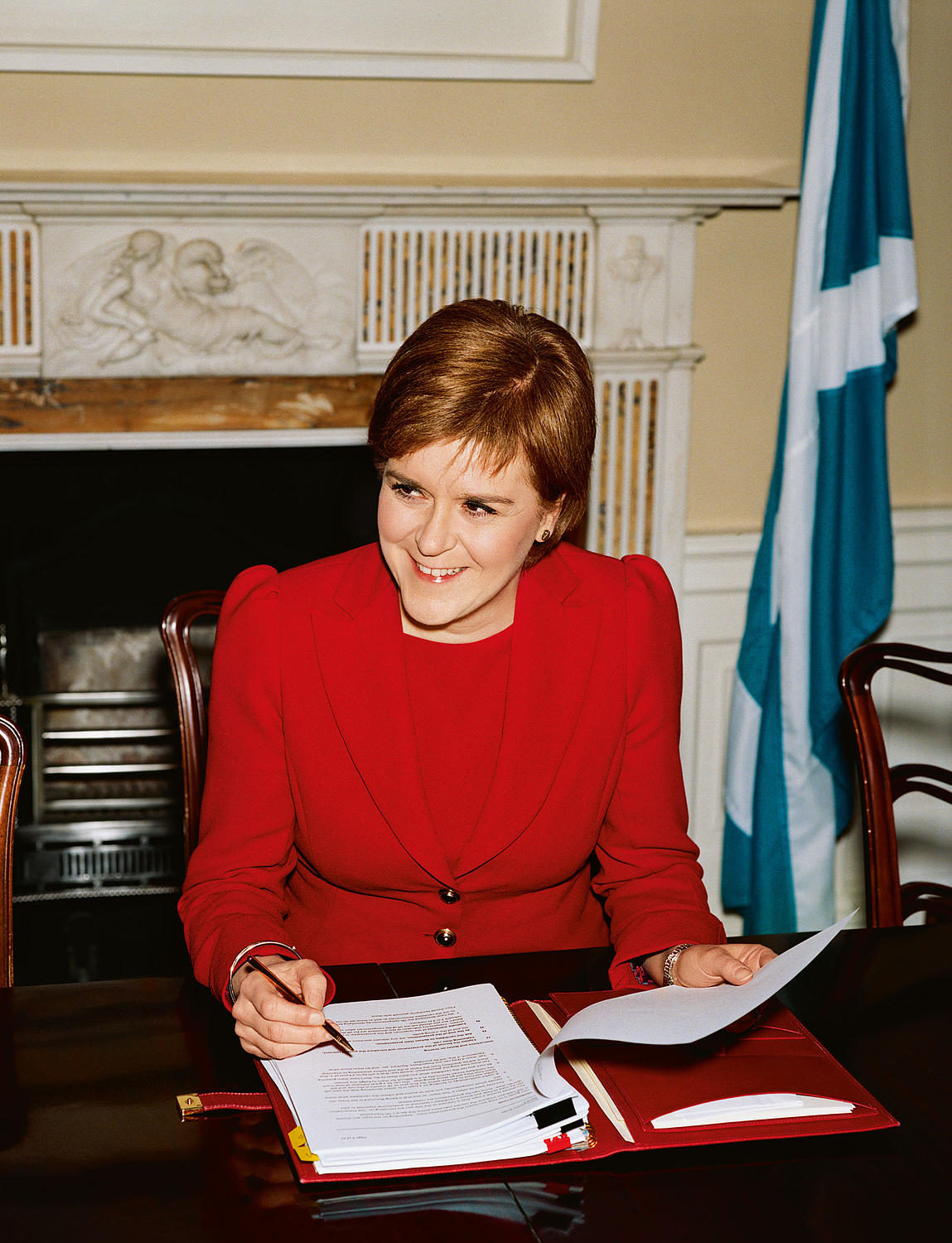
Nicola Sturgeon


These photographs show Scotland's first two SNP First Ministers, once allies, but now enemies. This post is not about their ongoing argument but about the country they have both led.
 ______________

The obvious answer to the question in the title is ‘Yes’.  Scotland has a population of around five and a half million, which is similar to Ireland but, unlike that other Celtic country, it is not divided in two between those who consider themselves British and those who do not.  If Luxembourg can survive with not much more than a tenth of that number, so can Scotland.

The issue is becoming more pressing all the time.  Although the Scots voted in 2014 to remain in the United Kingdom in what was then called a ‘once in a generation’ referendum, the issue has not gone away.  Nor was it likely to with the Scottish National Party (SNP) so strong and so determined to get its own way eventually on the issue that is the reason for its existence.

Democracy, however, is not always asking the same question until you get the answer you want.  Sometimes I think that Nicola Sturgeon, currently leader of the SNP, would hold a referendum every Thursday until it produced the result she wanted – after which she would suddenly lose all enthusiasm for the idea of asking the Scots to vote on independence.

As an Englishman, I veer between thinking that Scottish independence is none of my business – a sentiment most nationalists would probably agree with – and feeling that it would be a shame if the United Kingdom was to be completely destroyed by the Scots breaking away, which would seem the inevitable result of the country becoming independent.

But need it be?  If the Scots want to decide on what taxes they pay, form their own army and not send any MPs to London to decide the fate of those living north of the border, then it is surely not for those living south of the same border to insist that they remain stuck in a union most of them no longer want, if they ever did so in the first place.

England and Scotland have certain things in common apart from being neighbours, which does not seem to have made for good relations between the two countries.  One of these is the royal family, which has many Scottish links, not least the fact that the Queen is half-Scottish and has two homes in the country: Balmoral in the highlands and Holyrood Palace in Edinburgh.

I suspect that most Scots would opt for a greater degree of independence but not a complete divorce from the UK.  Rivalry between the England and Scotland is inevitable – just listen to the Scottish crowd booing Andy Farrell when they are asked to ‘respect the kicker’ at a rugby match in Murrayfield – but it need not be terminal.

The Union Jack (properly the Union Flag)

The symbol of the United Kingdom is, of course, the Union Flag, often referred to as the Union Jack.  A 'jack' flies from a jackstaff and the joining of the navies of the two countries led to their union - either that it was designed by the first king to peacefully rule over them, James (Jacques in Latin) the First of England and sixth of Scotland.  It would be a shame to lose such an interesting flag, even if it is a symbol of an increasing less viable union.

Maybe we could think of the UK as a voluntary union of countries that want to live together while making their own decisions about how they run their affairs?  (Much like the EU - although we know what happened there.)  We could keep the union flag and the royal family, but leave the Scots to set their own taxes and decide how to spend them.  

This might save England a deal of money.  The accepted wisdom is that England subsidises Scotland in terms of public spending because their public expenditure is higher than average in the UK.  If you take North Sea oil revenues into account, however, the picture is different and the subsidy going northwards is not so large.

There would be the matter of money, as in what type Scotland  should adopt.  Does it stick with sterling, join the euro or form its own currency with a Scottish pound?  If it stays with sterling, Scotland’s economy will be partly run from London without Scots having a say.  If it joins the Euro, the same problem exists from a greater distance.  If it adopts its own currency, would this be viable?

What about the border between England and Scotland?  I tell people that it is now just a line on the map and a sign at the side of the road.  Do we really want passport checks and visas for a crossing that we formerly sped past, stopping only to take a photograph as we crossed an historic - but not an actual - border?

I have not written about the spat between Nicola Sturgeon and Alex Salmond.  The argument – and the creation of a new independence party called Alba – is just a domestic squabble in comparison to the question of whether England and Scotland remain together in the United Kingdom or whether they go their separate ways. 

Whatever happens, England and Scotland will be forever tied together, even if they are at daggers drawn.  Plenty of families, including the royals, live in both countries so there could never be a Berlin wall between us.  Perish the thought.  In an era when it is becoming easier to cross borders, making it harder makes little sense.

Maybe independence will see the Scots cutting out some of the anti-England rhetoric which you often hear when you go north of the border and which can be a bit wearying after a while.  A country should not define itself by the enmity it feels towards it neighbour.  This might be the best reason for embracing independence.

Edwin Lerner

For the UK government's site on the money issue visit: here

My other blog is diaryofatouristguide.blogspot.com


Sunday, 28 February 2021

THE DEATH OF THE PEOPLE'S PRINCESS

The People's Princess in 1997
(photo from WikiCommons
John Mathew Smith &amp)

It was nearly a quarter of a century ago but if feels like yesterday.  I was just waking up on a sleepy Sunday morning when our son came in to wake us with the terrible news that Diana, Princess of Wales had been killed when the car she was travelling in span out of control in a tunnel under the Seine.  The date was 31stAugust 1997.  Everybody remembers where they were when they heard the news.  Diana had that sort of effect on people.  

Researching a possible book recently I came across the old idea that she was murdered.  Occasionally people put forward that theory when I was working as a tourist guide, a career that is on hold now if not defunct.  One lady from Australia, in particular, was convinced of it, and said ‘we in Oz think she was deliberately killed, Eddie’.  It is hard to argue with her degree of certainty but it has to be done.  So here goes.

As traffic increased in Britain, the government pushed for road safety on three fronts:

1. Clamping down on rink-driving

2. Wearing seatbelts

3. Enforcing speed limits.  

They did not just encourage these habits but made them compulsory by changing the laws. I admit that I have at times driven above the speed limit but we all know – and usually stick to – the rules.  Using a mobile phone is also prohibited by law but these were not so common when this particular accident occurred.

And it was an accident.  The jury at the inquest decided that after looking at the evidence carefully.  That seemed to shut the conspirators up for a time, although there are still plenty of people who agree with the last from Australia.  Just go on YouTube and search for 'Death of Diana'.  Yet the car se was in broke all three of the rules brought in to make the roads safer.

Diana’s driver Henri Paul was driving with over three times the amount of alcohol allowed under French in his blood.  His alcohol level was measured at 175 milligrams per 100 millitres, three and a half times the permitted level of 50 in France.  (It is 80 in England, but he was still over twice our limit.)  He had also been taking medicines that would have impaired his driving ability.  

The Mercedes he was driving - he was not a qualified or experienced limousine driver - was going at over twice the permitted speed permitted in the Port de l'Alma tunnel under the seine, a notorious accident black spot in Paris and lost control of the vehicle as he did so.

If you will forgive the phrase, however, the killer fact was that none of the occupants fastened their seatbelts when they left the Ritz Hotel in the early hours of the morning.  Diana’s bodyguard Trevor Rees Jones is the only one who survived, probably saved mainly by the airbag int he front of the car which cushioned the impact. Diana, her boyfriend at the time, Dodi Al-Fayed, and the driver did not.  The two men died instantly, while Diana made it to the Hospital Salt Pietre but her injuries were too serious and she died there.  

A distinguished consultant pathologist Alan Shepherd is of the opinion that, if she had been wearing her belt, she would have survived the crash.  If one good thing came out of that terrible tragedy, it was that it kept the anti-seatbelt crowd quiet for a while.  Hardly anybody now says that wearing one is an unnecessary infringement of liberty.

Could she have been deliberately killed?  It is not absolutely impossible but it would have shown remarkable powers of prediction to have guessed the route the driver would take after the couple left the Ritz by the back entrance to head for Dodi's flat, to have arranged the accident and to have got clean away without being noticed or photographed by the paparazzi pursuing her.

Moreover, to have known that she would not have buckled up when she got into that car would have taken superhuman powers of deduction or guesswork. If I wanted to kill someone and keep quiet about it, I would probably not choose the middle of Paris to do the deed, especially when there were dozens of photographers hanging around and recording her every move.

A jury did not think so either and, at the inquest into her death ten years after it happened, they blamed the driver and the pursuing paparazzi who were making her life hell.  After that most people gave up advancing conspiracy theories, with the exception of Mohammed Al-Fayed, Dodi’s father, who still thinks it was murder.  

But the people’s princess is gone now.  Everybody who saw her in action said that she had the gift of identifying and offering comfort to the most wounded and vulnerable person in any room she entered.  She could have been a great asset to the rather stuffy Windsors but it was not to be.  She could not adapt to their way of her life, nor they to hers.

In the end, Diana almost did what Oliver Cromwell did not manage, which was to drive a wedge between the British people and the royal family.  Cromwell was committed to getting rid of the monarchy but his republic – or Commonwealth as he preferred to call it – did not outlast him for long and the monarchy returned soon after his death.  

In contrast to Cromwell, Diana was a smart woman but one without academic distinction or any particular political programme.  She was a people person par excellence, who did a huge amount of good and exuded glamour wherever she went.  She was inevitably very popular because of this and poor worthy Charles could not hope to match her.  How ironic it was that, owing her position and popularity almost entirely to the existence of the monarchy, she should be the one who almost destroyed the institution.

Some people will continue to believe that she was assassinated.  Of course, they had her bumped off, they say.  She was too dangerous, too popular, too glamorous.  But the conspiracy would have involved too many people, one of whom was bound to spill the beans sooner or later.  Sometimes bad stuff just happens, particularly if you do not fasten your seatbelt. 

So, who killed the people's princess in the end? Sad to say, it was the people themselves.

_____________

Edwin Lerner

My other blog is diaryofatouristguide.blogspot.com

Sunday, 31 January 2021

LUNATICS

Josiah Wedgwood
 and grandparents of Charles Darwin
Erasmus Darwin
Both lunar men


In his entertaining book about the working of capitalism, How to Speak Money, John Lanchester wrote that, if somebody comes up with a bright idea and asks for money to help it get off the ground, adding ‘we will work out how to monetise it later’, then you should get out of the room as quickly as possible.  Cynical but sound advice.

People did not always think like that.  In the middle of the eighteenth century, as the Industrial Revolution was changing Britain forever, a group of men used to meet on the night of the full moon every month.  This was because there was no street-lighting to speak of and they could make their way with the aid of moonlight. They were known as ‘lunar men’, sometimes simply, if affectionately, as ‘lunaticks’.    

This group included Joseph Priestley, who discovered oxygen, James Watt, who developed steam power, Josiah Wedgwood, who built up the famous pottery company and his friend Erasmus Darwin, family doctor and inventor. Also floating around the group were James Keir, who worked with Priestley and was successful at both geology and industry and Mathew Boulton, who worked with Watt on steam power and can be seen with him on the £50 note - at least until Alan Turing arrives next year.

Turing relied mostly on the government for his income, working as an academic and a codebreaker at Bletchley Park.  The Lunar Men, however, saw no contradiction in making money and developing new ideas. In fact, the two were intimately related in their world view.  Watt was a cautious and suspicious Scot while Keir, also Scottish, was bolder and had a good eye for business.  He was interested in geology, which is not notably lucrative, but made a handsome fortune from his glassworks business.

Today, the role of businessman and scientist are strictly separated.  The successful Chief Executive Officer of a company will probably be a ruthless cutter of costs who is good at buying low and selling high, the secret of all good business.  This may mean laying off lots of people who do not contribute enough to profitability.  The ability and willingness to do this leads to a big income, if not to universal popularity.

Meanwhile, the job of coming up with new ideas and products is left to those who work in R and D (research and development).  This might involve inventing a new app for our smartphones or copying the fashion ideas of someone else without making it too obvious that you are ripping them off.  This is always a tricky area and many companies will need good lawyers to help them negotiate this minefield.

Everyone in a company has a role and they develop the special skills needed to excel in their area of expertise.  The lunar men did not operate like that but went where their curiosity took them and, if they could make money out of what they found, that was great but, if not, it was often still worth the journey to find a new idea.

This ability to investigate ideas for their own sake and at the same time to make a decent living is one I find fascinating.  Turning a profit was not something to be ashamed of but it was not the whole point of life.  Finding out new things, talking about new ideas, combining practicality with curiosity was the stuff of life for them.  

We are all products of our time and Britain was awash with curiosity in the middle of the eighteenth century when the industrial revolution and the enlightenment worked in tandem to encourage people to investigate and, to use the modern word, monetise at the same time.  When a new idea arrived you noted it down, discussed it with your fellow enquirers and then wondered if it promised any profitability for your business.

Erasmus Darwin is not the best known of the lunar men because he was a working doctor in a midlands town.  He was, literally, a man of substance, inclined to being overweight, cheerful but with a touch of melancholy, always curious, usually compassionate.  He treated the poor for free if they came to him, subsidising his benevolence by going to visit richer patients and charging them for his services.

He had several children, outliving his wife, who succumbed to dependence on alcohol.  The nurse he hired became his mistress, but not his wife because she was not from the right class.  (Benevolence obviously had its limits.)  His son Charles married the daughter of his friend Josiah Wedgwood and their son was Charles Darwin, the famous naturalist and the man who wrote On the Origin of the Species.

The lunar men were not atheists but they were doubters.  Joseph Priestley was a Unitarian, one who believed in God but not the literal truth of the Bible, a view for which he was attacked, both verbally and physically in the Birmingham Riots which followed the French Revolution.  Priestley ended up emigrating to America where he died, a great loss to Britain and a blot on our record of tolerating free-thinking types.

While Priestley continued to believe in God, Charles Darwin’s doubts eroded his faith.  He kept his findings hidden so as not to offend his more conventionally pious wife but the fact that Wallace Stevens was coming up with similar ideas led Darwin to take the plunge and publish.  Then the brown stuff really hit the fan and it became increasingly difficult to reconcile religion and science.

That all too brief glorious time when someone could combine a love of science, belief in God and the ability and willingness to make money was coming to an end.  We are all the poorer for it as a result.  Live on lunar men – but only as a memory.

My other blog is diaryofatouristguide.blogspot.com

Edwin Lerner

Thursday, 31 December 2020

COUNTING BLESSINGS


HIT
AND

MYTH 

Separating fact and fiction in England’s History 

Proposed title for my new book (above)

It is a dark morning on the last day of the year as I write this at my breakfast table.  I come to the end of the year having, for the first time in my adult life, not had a paid job for the entire calendar year.  There are – thank God – no money worries because the government gives me a modest pension and I also have a rental income.

Next year will be different, if things go to plan.  I have bookings for a couple of talks which I will give over the internet and I hope to sell my book idea.  It is provisionally called Hit and Myth and looks at stories we often tell and wonder whether they are true or not – was Richard the Third a bad guy, did Shakespeare write his plays, etc. 

I miss work.  Getting out of bed in the morning has never been easy but I am up in time if there is a job to go to.  So far, I have also got going in order to write but I wonder if I will continue to have the impetus should I fail to sell the idea.  There is only so much self-motivation that can get you going in the mornings.

We are always being told to count our blessings.  While many others have fallen sick because of the corona virus, I have enjoyed pretty good health.  There are two wonderful children, both independent and successful, and a daughter-in-law and granddaughter now.  I have a partner, a roof over my head and money in the bank.

While the corona virus/covid-19 has been disastrous for some and fatal for others, for me it has been a minor inconvenience, depriving me of work which I do not really need any more.  It has also given me the impetus to write, which is an area I have often toyed with, but not taken on into a proper professional career.

To be a writer or just to write?  I suppose that is the difference.  Anyone can sit down and type or scribble away.  Getting your book(s) into print and seeing them sell is a step beyond.  Having worked in the commercial world, I know that I need to persuade others that I am worth taking a punt on.  No luck yet - but I am on my way.  

I am about two thirds through the first draft of my book idea and have hopes for it is a viable – and sellable – product.  If a salesman sells a product the process involves someone buying it.  If a teacher teaches something to someone, they should be learning form it.  In the same way a writer needs readers if he is to have validity.

Once established, many writers seem to take their success for granted.  William Boyd, who is a writer I have a lot of time for and whose new novel I am reading, wrote in the introduction to his collection of occasional writing Bamboo that he kept resolving to give up journalism but kept getting asked to contribute yet another piece. 

If only we had that luxury, I thought.  Boyd is a writer I enjoy and whose life has run close to mine without us ever meeting: we were both born in Ghana at about the same time and his latest novel is set in Sussex where I grew up.  He might recall his days of struggle when he next says what type of work he can decide to drop.

Yet I resolved not to beat myself up for not being brilliant years ago.  It was not particularly a New Year’s resolution, just a realisation that we cannot all be super successful and famous and that doing the best job you can and being true to yourself is the most we can expect and we should be thankful for being productive and useful

If success and its companion fame come along, that would be nice and it remains the hope but, as I am nearer the end of my life than the beginning, it is a bit late to be suddenly become ambitious.  The sun has come up now and it looks like a good day ahead - and, hopefully, a good year as well, if a vaccine proves effective and people can finally travel once more. 

Being satisfied with what you have achieved should be enough to be going on with if you have at least tried to be honest and usefu to your fellows.  As the old cliché has it, count your blessings.  

Edwin Lerner

My other blog is diaryofatouristguide.blogspot.com