Sunday, 30 June 2024

IN PRAISE OF PUBLIC TRANSPORT

An old-fashioned Routemaster bus

We own a car - my partner Leena needs it to see her horses - and I have to pay Lambeth Council to park outside my house, but it is usually parked outside that house and does not move if she is on tour. I simply never drive my car into central London these days. Wi th the congestion charge the high price of paring and traffic delays it is just not worth it. SO the car stays unused until the more rural side of our life kicks in. Irony or what? We never use the car in town.

I usually take the tube into London, occasionally the bus, but the problem of parking and the fact that I often end my tours elsewhere to where I start them make parking the car not only expensive but awkward. I am of an age when public transport is not only convenient but free. My travel card gives me free access to the system.I do not care for motorcycles - noisy and unpleasant vehicles constantly drawing attention to themselves - and I no longer cycle either.

Going on buses and tube trains does, of course, have its downside. Sometimes trains are cancelled and buses, despite the bus lanes, can be slow and unreliable but on the whole it is the quickest - and certainly the cheapest - way to get around in London or indeed any major city. The Mayor of Greater London Sadiq Khan (the only Moslem to hold that office in a major western city, incidentally) is keen to get people onto public transport and he has succeeded.

Khan's father was a bus driver so he spent a fair part of his childhood on such vehicles. He has also encouraged bicycle travel by opening up cycle lanes. You will rarely if ever hear a taxi driver with a good word to say about him as taxi and car journeys are often very slow because of bicycle lanes which are often half empty next to crowded roads.I have a sneaking sympathy for the cab drivers, who are just trying to make a living, but I think Kahn's policy is right for London.

A friend of mine who used to work for British Rial said that it was impossible to bring everybody into work in a major city by anything other than trains. Fortunately, I have never had to do a regular commute of an hour or more but I agree with his analysis. (Actually, he probably borrowed it from some paper but you know what I mean.) Everybody driving their car would result in chaos so some form of public transport system is necessary to bring people to work.

I write enjoy the bus or tube ride to the centre of town. Tube trains travel at set speeds but bus drivers choose their own speed and some of them ignore the speed limit signs and go faster than the common twenty miles per hour limit in the city. I get the impression that just about anybody with the required licence can get a job with Transport for London (TfL) which used to go by the simpler name of London Transport and is still pretty much under the control of the Mayor.

So I will continue to join the rush and use public transport. I am about to set off to meet clients at a new hotel not too far from here and, if apprpriate I might suggest a journey on a bus. Tourists are usually (not always) keen to travel on one. although the old-fashioned Routemasters, as picture above, are rarely seen these days except on private tours. Whatever they cost the operator or passenger, they are cheaper and usually faster than hiring a car and driver.

Edwin Lerner

My other blog is diaryofatouristguide,blogspot.com


Thursday, 30 May 2024

TIES VERSUS TATTOOS

Sean Connery as James Bond wearing a tie - as always
 

I briefly chatted with a person serving me teach was working for English Heritage at Stonehenge the other day. His skin was covered with tattoos and I commented on this. He told me that he had been tattooed ten years ago and was quite fond of them. They were a part of his identity and he encouraged me to do the same and get myself tattooed. I told him that I would pass as I was not very fond of needles and we left it at that.


I was probably wearing a tie at the same time as I was working. I am old-fashioned enough to wear a tie when I go to work – although it is hardly necessary these days and lots of tourist guides do not bother to put one on and hardly any tourist do either. Casual is king these days but I am one of those curious men who feels he has not finished getting dressed unless he has put on his tie. An open neck shirt just does not do it for me.


A tie is a completely unnecessary piece of menswear. Women do not bother with a tie – unless they are trying to look like their male equivalents – and one man called it ‘a snake around my neck’. He obviously did not like his particular snake (and I like his image) but I have quite a collection of ties and I take a certain amount of pleasure in selecting which one to wear and putting it on, usually with a Windsor knot and the top button undone. 


The point about a tie is that it is temporary. You do not have to wear the same one tomorrow and I adjust which one I put on depending on what I am doing and which shirt is on underneath. Some of my ties I hardly ever use, others have seen a good deal of service and others are now starting to show their age. Although I wear one when I go to work or to some kind of formal occasion, I have called a halt to tie acquisition and don’t buy new ones.


A tattoo, however, is permanent. Removing one is both expensive and unsightly, often leaving nasty scars on the skin. Most people stick with their tattoos or ‘body art’, as it is sometimes called.  No matter how good (or bad) your tattoo is, you are stuck with it for the rest of your time on this planet. What will older people with elaborate body art on the surface of their bodies look like as said bodies start to shrink and shrivel as people age.


When I look at footballers, most of them have tattoos and sometimes they are covered with them. I prefer plain skinned people, I must admit, and I will almost certainly never allow anyone to carve anything on my torso. Not only am I unhappy with the thought of needles but I simply do not want anything permanent on my skin. Give me a temporary tie any day rather than a permanent tattoo. You can (and do) change your tie but not your tattoo.


I have further theories about ties. If you wear it fully buttoned up, you are indicating that you are a member of the establishment. If you wear it loosely around your neck with the knot loosened then you may be in the establishment but you not of the establishment. It is an expression of independence to wear your tie loose around your neck. You might earn a living by working for the establishment but you do not accept all their (usually) conservative values. 


This is almost an accepted code in Hollywood films. When James Bond appears on screen he usually wears a suit and tie as he works for MI6, the ultimate establishment organisation – even if he is something of a lone wolf with his own agenda. Billy Crudup, playing a composite of journalists interviewing Jackie Kennedy is shown, however, with a loosely knotted tie  in the film Jackie. The Kennedy men are shown with properly done-up ties.


In real life, Jackie Kennedy was enough of a fashion icon to not have given the time of day – let alone a full interview – to someone dressed as casually as Crudup was shown. However, the filmmaker (and possibly the actor) wanted to show a rebellious streak to the journalist so he is shown with a loosely knotted tie, which is shorthand for saying that the journo and the film are not mere hagiographies but are fashioned out of respect for the subject.


That this is the main thing I remember about the film – Crudup’s loosely knotted tie – is probably significant. I am enough of an establishment type to normally wear a tie when I go to work but, having a rather thick neck, I do not do up my shirt fully but use a Windsor knot to cover this up. I tell people that this is the one thing that the Duke of Windsor contributed that was worthwhile – even if Bond thought that the knot was the sign of a ‘cad’.


Neither ties nor tattoos are necessary. They are purely decorative aspects of menswear but, why should we not have something superficial and decorative to add to our wardrobe? Tattoos, however are permanent, and you are stuck with them even if you no longer support the cause (or the woman) honoured in them. Wearing a tie may be unnecessary but it can be fun and should not be ditched altogether for the sake of playing it casual. 

________________


My other blog is diaryofatouristguide.blogspot.com


Edwin Lerner

Monday, 29 April 2024

MIXING STRONG AND WEAK


Martini Glass (Wikimedia)

I used to like a dry martini. The trouble was that they did not like me. It was hardly ever just one – but two or sometimes three. They would then send me to sleep and I would wake up at three o’clock in the morning, often with my heart beating too fast. Despite owning some Waterford Crystal martini glasses I effectively gave them up by the simply expedient of not buying the Vermouth which I would use to make the drink they are named after. 

With gin so with vodka, except more so. I like an alcoholic drink that has a stop mechanism in it. So I tend to drink whisky or, occasionally, brandy rather than clear spirits. You can sip some and then it is natural to stop, whereas with clear spirits like vodka, gin and ‘white’ rum like Bacardi, you tend to continue drinking until you realise you have had too much, by which time it is a bit late to stop (although I do).


Do not get me wrong. I have always said that I hope to drink champagne on the day I die so that I can toast a life well-lived. In fact, I will drink almost anything alcoholic, although I do not care for cream liqueurs like Baileys Irish Cream. This is because of the cream and not the whisky or other spirit it is mixed with. I am not that keen on retsina, the sour Greek wine, but I dare say I could develop a taste for it if I had to and there was no alternative available.


Alcohol is my drug of choice. I come from a non-smoking background and, apart from the odd cigar, I have never bothered with it much. Likewise, I do not do drugs, not out of principle but more from cowardice. If I want to relax with something it has to be legal: I am that boring, I am afraid, although I think that the government’s attitude to drugs is little short of absurd and they are missing out on valuable tax revenues by criminalising drugs.


There are three types of substance we can put into our bodies which I shall call black, white and grey. Black substances like cyanide and strychnine are obviously dangerous and have to be prohibited or at least controlled very tightly. White ones are nutritious and, unless mixed with black, are harmless – food and water, basically, necessary for life but not particularly exciting in themselves. You can consume these to your heart’s content with fell ill-effects.


Then there are grey ones, which make life more interesting (worth living for some) but are not necessary for survival. I would put alcohol, tobacco and drugs in this category but also caffeine drinks like tea and coffee which are unnecessary for survival but give us a kick start now and again. Widen this category and you can include birth control pills, hand guns, even pornography, all involving products we do not need but enjoy for the pleasure they provide.


The trouble is that pleasurable products are addictive. We find it hard to srvive without the high given by a simple glass of wine or a simple cup of coffee, even though we do not need them to survive. Some people cut all grey substances out of their lives. Mormons come to mind here: they do not consume alcohol or caffeine and, although they do have sex, it is largely for procreation so probably do not use the pill very much.


Now, it is perfectly possible to ruin your life with grey substances. Most of us have known alcoholics, those addicted to smoking or junkies who have died early because they cannot seem to shake off a dependency on the drugs they crave. However, I firmly believe that the fact that some people become addicts is not a reason to prevent people like me enjoying a glass of whisky, a cigar or even the occasional joint. We simply have to put their probably early deaths down to collateral damage and go on enjoying our grey substances.


That is why I am so firmly opposed to the smoking ban which the British government seems so keen to introduce, albeit surreptitiously by preventing people from buying cigarettes or other tobacco products if they are born after a certain year. This will have the effect of criminalising the shopkeeper who sells the tobacco rather than the purchaser, which is yet another burden on them and is surely another good reason to oppose the law.


If this anti-smoking law is passed, and not repealed by a future government, it will surely make it much harderto decriminalise soft (and eventually hard) drugs, which I think should be at the top of the agenda for the government. The authorities have no business banning the consumption of grey products in order to protect the vulnerable. I am enough of an individualist to think that these people have a responsibility to look after themselves. 


Plenty of people lead normal - or near normal - lives while consuming grey substances and should not be stopped from doing so because others destroy their lives. Michael Gove, not exactly known for his liberal attitude to drugs, has even admitted to taking cocaine after a drinking session in the last, yet this action was largely ignored by those who want to ban drugs. Do what I say not do what I do seems to be their attitude.


As my own contribution towards exercising restraint on grey substances, I have given up Martinis and now content myself with gin and tonics, mixing a strong drink with a weak non-alcoholic one. I also refrain from drinking twice a week and for the first two months of the year if only so I can free myself of the accusation of being an alcohol addict. I still enjoy a drink and hope to have one on the day I die – although I have no immediate plans for that.     

To read my thoughts on New Zealand's smoking 'ban' go here

My other blog is diaryofatouristguide.blogspot.com 

Edwin Lerner

Saturday, 30 March 2024

CLEMENT ATTLEE - A DULL BUT ELECTABLE FIGURE

Attlee, reformer who looked like a solicitor

Although I am a Labour voter, I have to admit that the Conservatives give the impression of being a better home for both women and people from ethnic minorities. Only four people – all men, all white – have won power as Labour leaders yet the Conservatives have had three female leaders (who have all become Prime Minister) and, if rumour is true, they may have a fourth before long. Kemi Badenoch, who is both female and black, is said to be favourite to be their next leader if, as expected, Rishi Sunak, who is brown, loses the next election.

Labour has had six Prime Ministers, two of them having inherited the role. The four who won elections were Ramsay MacDonald, Clement Attlee, Harold Wilson and Tony Blair. The first was MacDonald, who was reviled for having agreed to form a national government with the hated Tories and was actually expelled from the party he had helped to found with Kier Hardie (after whom Starmer was named). Wilson was a clever fixer and a shrewd politician who was Prime Minister four times and Blair held office for ten years before handing over to Gordon Brown.


However, it was Attlee who led the post-war Labour government and probably made the most significant changes of all four of them. It was under Attlee that the National Health Service was started, many major industries were nationalised and the taxation of the rich was increased. This increase continued under Wilson to lengths which now seem both punitive and impossible and which seemed to show that Labour was the high tax party, willing to hit the rich with high marginal rates, maybe not so good at stimulating the economy to help people earn.


I read Attlee’s autobiography recently. It is safe to say that it is not an exciting read. Attlee was ‘a safe pair of hands’ who effected a lot of radical changes in society despite being a small c conservative in appearance. I did not see the film but Ken Loach, a noted left-wing film-maker, produced a homage to the post-war Labour government of Attlee some years ago. What received less publicity was that Attlee had not objected to the Americans dropping of the atom bomb and that he allowed British soldiers to be sent to fight in Korea.


Attlee himself had fought in the First World War and, had it not been for a lucky illness, may well have paid with his life, having been in the ill-fated Gallipoli campaign which was attributed to Winston Churchill. Later Attlee was to serve under Churchill as his deputy during the Second World War. Afterwards he defeated his former boss in the 1945 election and then brought the atom bomb to Britain. Labour governments are often more bellicose than Conservative, as the Iraq war, where Tony Blair supported the American invasion of Iraq, proved.


Attlee had proved to be a loyal and able deputy to Churchill during the years of the Second World War. Their duties were divided into running the country and running the war. After Germany had been defeated – but before Japan surrendered – Attlee’s Labour party beat the Conservatives by a thumping margin. It was before the days of opinion polls and people are still sometimes surprised at how comprehensively Churchill’s government was defeated.


I remember Barbara Castle, who was a cabinet member in a later Labour government, said that people might have voted Churchill back in out of gratitude but not his party. In Britain you do not vote for a president as the Americans do (we have a monarch for that job) but for a party to run the country. People felt it was time for a change and entrusted Attlee not his former boss Churchill to effect the changes needed – particularly founding the NHS.


Winning elections is not about preaching to the choir but, under our electoral system at least, involves persuading floating voters in marginal constituencies to vote for you. I suspect that these are not the most sophisticated voters and that they do not spend a lot time perusing manifestos and commitments but make their voting decisions on very a very visceral level, often reacting to their perception of the character of a party’s leader. That Blair (or Thatcher or Attlee) seems ok and I will vote for him/her as ‘a safe pair of hands’.


Attlee, who went to a public school and practiced as a lawyer, came from a background where a strong sense of public duty was expected. His very dullness was actually a recommendation to people who would not otherwise have trusted some of the more fiery radical figures he was surrounded with, but whom he allowed to get on with the business of founding the NHS, which doctors now swear by but which many of them swore at when it was started. As its founder Aneurin (Nye) Bevan said he would ‘stuff their mouths with gold’ to win them over. And he did.


Attlee was far more complimentary about Churchill than hw was about MacDonald. One of his last public duties was attending Churchill's funeral, where he caught a chill and died soon after. Attlee never made MacDonald's mistake of sacrificing socialist values for the sake of national unity. He showed no embarrassment about using the word ‘socialist’ to describe his views. At a certain level, however, he knew that he had to reassure rather than alienate those floating voters if he was going to get things done. He too was a doer and we are still grateful for what he did. 


Edwin Lerner My other blog is diaryofatouristguide.blogspot.com


Thursday, 29 February 2024

LEAP YEAR MANSPLAINING


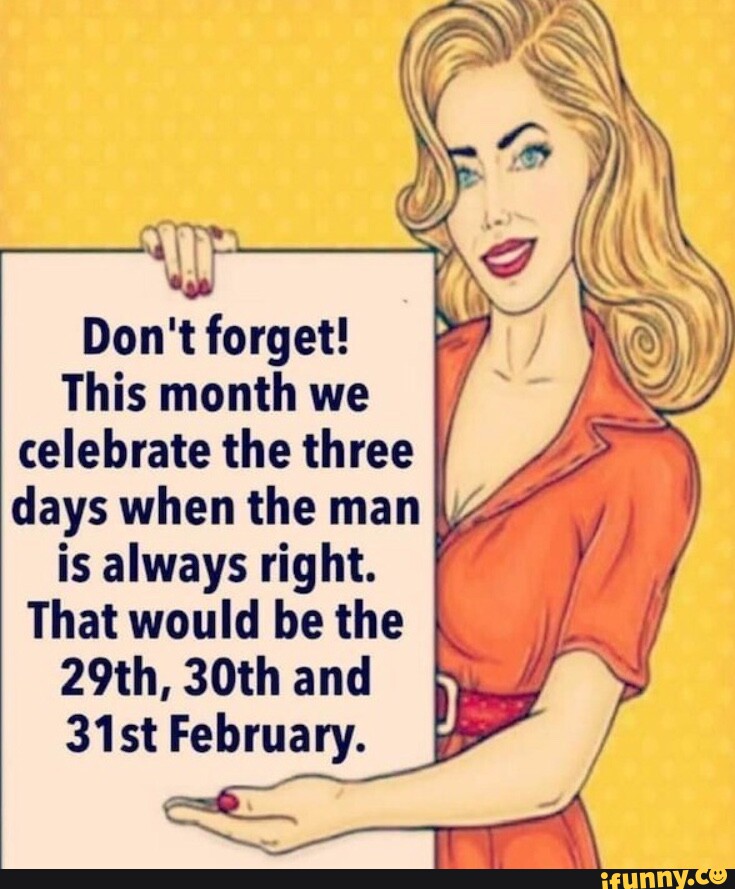
On Facebook I saw a cartoon (above). It said that men are always right on the following dates: 29th, 30th and 31st February. Of course, these dates do not normally exist but 2024 has a 29th February, being a Leap Year. These posts go out on the last day of the month, which is 29th February this time and so I thought it might be relevant to look at the Leap year issue, which will at least be relevant to the date. It may not seem important but there is a reason for it.

To explain the Leap Year, process I have had to resort to Wikipedia, my normal source of information. You can read the full account here but it basically comes down to the differences between the Julian and Gregorian calendars. The Julian calendar was, as its name suggests, introduced by Julius Caesar in 45 BC and made a year match the movement of the sun. The Gregorian calendar came into effect in 1582 and was that bit more accurate.


The earth moves around the sun in 365 and a quarter days, which means that you have to elbow in an extra day every four years to make up for the quarter day. That is why we have Leap Years. However, it is not quite that simple. The exact time it takes for the earth to rotate around the sun is 365.245 days, which means that the more accurate Gregorian calendar misses out the Leap Year in dates divisible by 100 but not in those divisible by 400.


The Gregorian calendar was introduced in 1582 and named after – but not invented by the Pope at the time, Gregory the Thirteenth. The real inventor of the new and more accurate calendar was Aloysius Lillius and it was suggested by a German mathematician and astronomer called Christopher Clavius. Both men, however, have been largely forgotten by history and Pope Gregory is remembered simply because he gave its name to the more accurate calendar.


The slightly slower rotation of the earth around the sun means that 1600 and 2000 are Leap Years but 1900 and 1500 are not. Over time this in turn led to the Julian and Gregorian calendars being out of sync by eleven days and in the eighteenth century the more accurate Gregorian calendar won out over the less accurate Julian one. Britain ended up admitting defeat and aligning with the Gregorian calendar by an Act of Parliament in the year 1752.


This in turn led to eleven ‘lost’ days in that year as the two calendars aligned and, predictably enough, a lot of muttering about bloody foreigners stealing days from us. There is nothing new in the world. This just an early precursor of Brexit and by which we think we can solve all our problems be breaking away from countries that we had previously quite happily done business with. And that has not turned out well - in my opinion, at least.


I was wondering how serious the riots and objections to the ‘lost’ eleven days really were so, inevitably, I looked it up on the internet. The satirical painter William Hogarth showed an election scene in which a Tory poster is shown demanding these eleven ‘lost’ days back. The site I found this on (historic-uk.com) also says that ‘most historians now believe that these protests never happened [and were] the Georgian equivalent of an urban myth’.


There was probably a fair bit of grumbling about the ‘lost’ days and complaints about new-fangled ideas but most people accepted the new system and grudgingly admitted that there was a certain amount of sense in being aligned with the rest of Europe. After all, we still did a lot of business with European countries and it seemed sensible to be on the same calendar (or page) as them, even if we did not like the idea of synchronising with a European system. 


There was nothing imaginary about the Brexit vote, however. Those who wanted to break from Europe won that one and got their way. That surely was only the start of the process. It now behoves those who were in favour of breaking with Europe to show that the process can be successful and profitable for us as a country. If it had been left to people like me, nothing much would have happened and we would be trading with Europe as we were.


My partner and I went to Spain (which, incidentally, did not convert to the new calendar until 1926) before the Brexit referendum. We reached our hotel barely an hour after the plane touched down and were greeted pleasantly by the staff, who all spoke perfect English, and checked in quickly. I wondered why we considered it necessary to hate these people so much, what possible benefits could come from breaking with them and making Britain more bolshy.


It is apparently far harder now for people who actually make things to export them to European countries because they have to jump through a series of totally unnecessary hoops and fill in multiple forms to do so. The trade wins which were supposed to come about after Brexit seem to me to be totally imaginary. As one of my friends said when we had the original vote on the subject ‘The future for Britain has to be in Europe - surely.’


I see no reason to contradict him fifty years later. It is up to the Brexiteers to prove that their system of an independent Britain is going to work better than one which is integrated into Europe and there is not much sign that this is happening now. Just as the calendar was changed, despite the objections of those who considered it a popish plot and a European impertinence, so Brexit does not seem like the sensible solution to Britain’s problems.


Edwin Lerner


My other blog is diaryofatourist guide.blogspot.com

Tuesday, 30 January 2024

PACIFISM WILL NOT DEFEAT FASCISM

Universally recognised as a symbol of Nazism,
although the Swastika has a more ancient origin

Many countries have national service in which men (sometimes women as well) have to go into uniform and, if necessary, fight for their country. Although this has never been a British tradition, it has now been suggested here. The conscripted do not have the right to make the decision to go to war. That is done for them by older politicians who rarely see any of the fighting. The soldiers in uniform just have to fight, kill and either be killed or survive until the war is over.

They may opt to be classed as conscientious objectors, sometimes abbreviated to ‘conchies’. The phrase that has a hint of contempt in it and those who choose not to fight are often looked down on as cowards by those who do put on the uniform (and their supporters). However, it takes a certain type of bravery to reject war as a means of solving problems. It is often easier, in fact, to join the crowd lining up to enlist. At least no-one will accuse you of being a coward.


The Jehovah’s Witnesses, who stand on street corners in all weathers and knock on doors to try and convert people are all conscientious objectors. They pay their taxes and generally obey the law but they will not fight for their country, owing allegiance to a higher power. Many of them suffered badly at the hands of powerful rulers like the Nazis, who did not have sympathy for their views and regarded them as expendable – like the Jews they sent to the gas chambers.


I have a certain sympathy for this point of view but I cannot back it completely. There is a phrase, which I think I heard on the radio first, that ‘the best is the enemy of the good’ and that sums up my attitude. Obviously, we should not be trying to sort out our problems by king each other. The current war in the Middle East surely demonstrates that. Hamas will never destroy Israel and Israel will never destroy Hamas so the two sides have to learn to live with each other – which they show no signs of being either willing or able to do at present.


Yet, this message falls on deaf ears when delivered to people who think that violence will solve their problems by destroying their enemies – Jews, blacks, Arabs or whoever. The Nazi fascists really believed they could create a lasting Reich by killing Jews. Actually, although we remember that aspect of Nazism now, the Second World War did not start because of the killing of Jews. It started because Germany had to be reined in and we need a war to do so.


This is also why we dropped nuclear bombs on Hiroshima and Nagasaki and why we bombed Dresden so ruthlessly. We had to convince the fascists and fanatics who ruled these countries that the fighting was over and they had lost. Pacifism was never going to do that. It was necessary to defeat them militarily, to fight fire with fire, to talk them in the language they understood – whatever cliche you care to use – to show that resistance was doomed.


That argument would never convince conscientious objectors that boycotting all war was worthwhile. If you were not prepared to fight for your homeland off you went to the gas chambers. Between 1500 and 2000 Witnesses were killed in the course of the war. This number is minute when compared to the six million Jews who were gassed or shot and there is some evidence that, if they kept their heads down, Witnesses might be allowed to survive. 


However, although they may not have been persecuted like the Jews, who were killed automatically because of who they were, Witnesses had to learn to do the Nazi salute and pass themselves off as good Germans, to prop up fascism even if they would not fight for it. When it comes down to it, you have to make choices in life and some Witnesses chose to be complicit in Nazism. Others died or exiled themselves to avoid supporting facsism.


We did some fairly horrific things to the German people during the war, brutally bombing their cities from a sky which we increasingly controlled.. And to the Japanese for that matter. Japanese soldiers were not taken prisoner until the US army paid their soldiers a kind of ransom fee for bringing them in alive. To be fair, the Japanese authorities did not countenance surrender to the hated enemy either, death being preferable to the dishonour of surrender. 


Yet still neither country would surrender when it must have been obvious that they could not win the war. Lots of German citizens, who were suspected of being ready to surrender, were executed by their own side, their bodies left to hang from trees and lampposts, presumably to discourage those who saw them from having defeatist thoughts. If you surrendered – or even thought about surrendering – you were killed by the fascist overlords.


This kind of fanaticism will not be defeated by idealism or conscientious objection to war. It needed the kind of brutality that fascists inflicted on those they considered inferior to stop them in their tracks. That is why I would have fought in the Second World War and why it was right to bomb German cities like Dresden and Hamburg. Otherwise, it would have been necessary to sacrifice the lives of soldiers who were fighting their way to Berlin or Tokyo.


Life is about alternatives not absolutes. If you could say to the parents of those soldiers who had willingly put on army uniforms that the war could be won in a week or two by bombing but you would extend it by continuing to fight on land, inevitably at the cost of the lives of those soldiers, so that you would not be condemned by later generations for war crimes, you would be justified in opposing the atom bomb or the blanket bombing of Dresden and Hamburg.


I do not think I could do that, however. You cannot defeat fascism with idealism.


Edwin Lerner


My other blog is diaryofatouristguide.blogspot.com


Sunday, 31 December 2023

A SOLO CHRISTMAS


A lady bishop Sarah Mulally conducted the service

I sometimes used to say that I would not mind having Christmas on my own. I was in the middle of a mild tug of love at the time, between my partner and my children and ex and felt that I would not mind being shot of the whole occasion. That happened this year, by accident not by design, and I have had the chance to reflect on it now. My children were both away with their wife or boyfriend's families and my partner was working so I was on my own for Christmas this year.

Last year I worked over Christmas and I worked on Christmas Eve was well. They did not want me on Christmas Day itself this time, so I stayed in my house in London. Everything closes down over Christmas in the Uk and I there are no buses or rube trains. I decided, however er, to go to church and so walked to Saint Paul's Cathedral and back which takes the best part of two hours each way - although I do not walk as well as I used to and gt a taxi for the final part of each trip.

It was a lovely service at St Paul's led by the lady bishop Sarah Mulally with a sermon by the (male) dean. Any temptation I may have had to convert to Catholicism would be stymied by the thought that they refuse to countenance any woman fulfilling the job of priest. The service was attended by lots of people and they made a point of welcoming those 'of all faiths and none', as the phrase nowadays has it. You can be pious or just curious and you will be welcomed there.

I would not count myself among the pious but I was a little more than curious. I self-define as a Christian but I find it very hard to believe in an afterlife - it would be a little dull apart from anything else, being stuck in Heaven for perpetuity with no physical pleasures to enjoy - yet Christianity seems a g good way to lead your life and it has stood the test of time, so I accept it even if I do not fully embrace every aspect of its theology. I take it seriously - but not literally.

After the service I walked back to Brixton. My partner said I should have driven but I needed the walk and I was not certain of finding a place to park even on Christmas Day. The police might have given me a ticket even if the traffic wardens were off duty and I did not want to risk it so a walk seemed the best option. I certainly had time to kill. After that found a Pret A Manger that was open in Brixton and had a solitary meal before watching Doctor Who (excellent by the way).  

It was a fairly uneventful day than, with telephone calls to my children and partner and a zoom with my brothers so I was not entirely isolated. My solo Christmas was an interesting experiment but not one I would necessarily want to repeat very often. It made me realise that human beings are essentially social creatures who need a degree of human contact. Christmas can be a time when those who are on their own are isolated and, therefore, most likely to feel lonely.

Edwin Lerner  

My other blog is diaryofatouristguide.blogspot.com