Wednesday, 30 August 2023

MIGHT VERSUS RIGHT

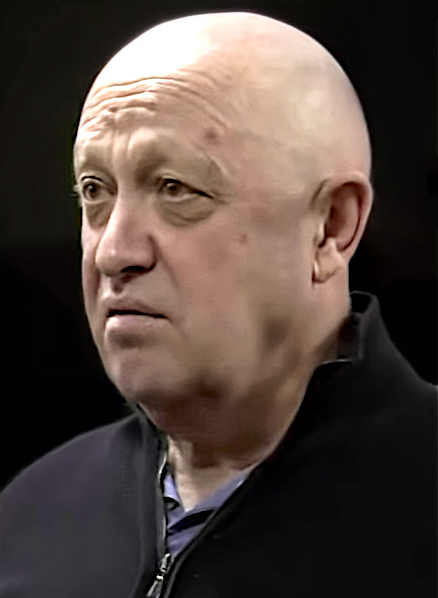
Prigozhin and his (probable) killer

Russian president Vladimir Putin


‘Well, that is a surprise!’ noted one sarcastic contributor to Facebook as news came through of the death of Yevgeny Prigozhin in a plane crash just two months after his abortive coup in Russia against Vladimir Putin. It had seemed to be that Putin might just forgive his rival who led the Wagner mercenary group and had sent his men – often to their deaths – into Ukraine.


How naïve that now seems in retrospect. Putin is not the sort of man to tolerate any form of independence or dissent, which he categorises as being a 'traitor’, ie someone is not totally loyal to him. It was evidently only a matter of time before Prigpzhin had to be eliminated and, if nine others died with him, who cares?  In Russia, the crew member and pilots are considered collateral damage and their deaths are ignored - or tolerated. 


It may seem like you are safe in the sky but you are actually very vulnerable in an aeroplane. A plane can be shot down relatively easily and your chance of survival is virtually nil. Give a man just enough time to think he is safe enough to fly and then bring down his plane and there will be no survivors and little in the way of proof that it was not an accidental event. It now seems that it was a bomb inside the plane that brought it down rather than a missile, although we will never be completely sure, such is the fog of disinformation that comes out of Russia.


Putin and his cronies have form in this respect. The Russian security services – surely with Putin’s at least tacit approval – sent assassins to kill Sergei Skirpal, a man they regarded as a traitor who was living in Salisbury in England. This had the element of a Keystone Cops operation and a British woman Dawn Sturgess ended up being the only (accidental) victim. Again she was collateral damage in the process, although she had nothing to do with Skirpal but, being poor, accepted as a present some perfume which was actually a deadly poison.


The Russians had the gall to pretend that the assassins were only going to Salisbury to look at the cathedral spire, ignoring Big Ben and the other better known sites in Britain. They were captured on camera at Heathrow but have got away with their crime and are now free (presumably) in Russia. They failed to kill their target but did send out a warning that Russia does not tolerate any form of free thinking or dissent. 


What angers me so much about this attitude is that Putin just laughs at the idea that they should respect Britain’s domestic laws and procedures for dealing with these matters in our quaint law-abiding country. He (or the Russian state, which is really the same thing) send their assassins anywhere in the world where there are independent thinkers - or 'traitors'.


Putin has no interest in respecting the territory of other countries or human rights, even lives. He wants to go down in history as the man who brought Ukraine back into the Russian fold and, if this means sacrificing lives, he is quite prepared for that. Thousands of Russian soldiers and Ukrainian civilians have had to be sacrificed for his vanity and ambition.


Sometimes we are asked who we despise most. I try not to do this – it is too easy to blame individuals when it is a collective failure that should be targeted, such as at Grenfell Tower, where the desire to lock up individuals is actually deflecting blame from what was surely a collective unwillingness to apply basic safety precautions in the name of greater economy.


Yet I am prepared to make an exception for Putin, whose monstrous vanity has led to so many deaths, both of Russian soldiers and Ukrainians who would prefer to head west rather than east, And who can blame them when all they have when under Russian ‘protection’ is a loss of their national identity and absorption into a country that wants to conquer them?


There are signs that the Russians are growing tired of Putin and tha this grip on power maybe slipping. Those who think independently are either silenced by being locked up or have given up on Russia altogether and are moving abroad (which only accentuates the problems). However, there is one thing that makes a tyrant vulnerable and that is failure.


If the Russians do grow tired of Putin and decide to dispose of him, I will not shed a tear. He has dealt out so much death that this is the only option for him now. He would never stay quiet as a deposed leader so any dethronement would have to end in his death. How does that old saying go? If you live by the sword, you have to die by the sword. As for us, we can only say that might does not have to triumph over right and that we should continue to support right over might.


Edwin Lerner


My other bog is diaryofatouristguide.blospot.com

Sunday, 30 July 2023

DO THEY LET THE WEALTH TRICKLE DOWN?

The new £20 note with a young JMW Turner

In my main job as a tourist guide, I have noticed that people increasingly are hiring an individual tourist guide to show them around rather than joining an organised group tour. Having your own guide does (or should) offer people more flexibility to decide, often at the last minute, to alter and rearrange their plans, which they cannot do on an organised tour.

There is a difference between flexible and disorganised. Guides should be able to adapt to changing circumstances, which might mean that people altering their plans at the last minute. People often underestimate how big a city London is and just how tiring sightseeing can be, so they often trim their itineraries. Only rarely do they choose to do more.


When I started working as a tourist guide, I realised that I had to be something of a dictator, albeit a benevolent one. People do not in the end thank you if they miss seeing something they had paid for because you delayed too long, either waiting for a latecomer or having an extra but not strictly necessary photo stop. You often need to be ruthless to be successful.


I do not know what the companies charge for a private tour but I do know what the guide fees are: around £350 for a full day and £200 for a half day, more if you work in a foreign language which, much to my shame. I do not. Actually, English is so much the language of tourism that my stubborn inability to speak foreign languages does not hold me back much.


A colleague said that guides in other countries are expected to speak at least one other foreign language if they want to qualify. Although I had a certain sympathy with this attitude, the fact is that my monlinguisticality (a word I have evidently just invented) is not that important to my career. In short, most of my clients speak English, as I do to them.


They also like the individuality of having a personal guide. My partner, who also works in tourism, said that, when she started, she was told that she would probably be the only local person that most of her passengers meet. The implication was that she would have to make a god impression because her whole nationality would be judged on her sole personality.


There also come into contact with hotel staff, drivers and other miscellaneous people but many of these have come here to find a job and the tourist business offers the good opportunities to work casually and often for cash. While their guide might be ultra-qualified, these miscellaneous extras will speak passable English but do so as a second language.


The human element should never be forgotten by guides. Sometimes I think that we are blinded by our qualifications and forget that we are working with other human beings in a commercial environment. To make a living we should never forget that we need others to cough up cash to provide us with an income. Some of that wealth has to trickle down towards us.   


Edwin Lerner


My other blog is diaryofatouristguide.blogspot.com


Friday, 30 June 2023

WHAT DO THEY DO WITH THE BODIES?

Extraction 2 poster.jpg
Extraction 2's hero Chris Hemsworth

I once saw a film - long forgotten now in other respects - in which the villains dispose of at the dead bodies of one their gang (possible one of their victims) by burning it in a furnace. The scene was oddly memorable mainly because there was no dialogue in it. They were just disposing of evidence that might have led the police back to them and need to leave no traces

Yet dead bodies do leave traces of their existence - and very memorable ones. Napoleon was supposed to go hunting over the battlefield the day after snoring the corpses of men he had sent to their deaths. These same corpses would then be buried communally, turned into fertiliser and the men who had fallen not given and individual graves. They had served their purpose.

Thomas Hardy's poem Drummer Hodge is about a young boy who, as his name implies, keeps soldiers older and more experienced than him in line and disciplined by his rhythmic drumming;

They throw in Drummer Hodge, to rest 
Uncoffined -- just as found: 
His landmark is a kopje-crest 
That breaks the veldt around: 
And foreign constellations west 
Each night above his mound. 

Young Hodge the drummer never knew -- 
Fresh from his Wessex home -- 
The meaning of the broad Karoo, 
The Bush, the dusty loam, 
And why uprose to nightly view 
Strange stars amid the gloam. 

Yet portion of that unknown plain 
Will Hodge for ever be; 
His homely Northern breast and brain 
Grow to some Southern tree, 
And strange-eyed constellations reign 
His stars eternally.

Hodge is killed in Africa, presumably in the Boer War, and lies 'uncoffined' in a grave on the veldt. He must have been about seventeen and the battle in which he fell was probably his first. I am grateful to Alan Bennett for bringing the poem to my attention in his play The History Boys.

So-called action films these days are noted for the high body count they have, with the hero offing lots of anonymous baddies in various different ways. The latest I saw was Extraction 2 on Netflix - I must admit to having watched it in an idle moment a few weeks ago. Chris Hemsworth is the professionalit who rescues a family from eastern gangsters, killing dozens as he does so. It is not a subtle film but it did pass the 'not falling asleep during it' test at least.

I always think of the aftermath. What happens to the dozens of dead bodes that are left lying about after the hero has worked his way through them? The newspapers and media, of course, would soon unearth the killer of these men so he could not expect to have a quiet life - as he is shown doing at the beginning and end - and he would be soon be expected to tell 'his story'.

We liv ein a world in which there is no - or very little chance of anonymity and being forgotten by the world - yet modern heroes are expected to go into battle unknown and unrecognised. Not to mention their victims who will always have families, loved ones and supporters who will tell anyone who listens that their Grigory was really a nice man and should not remain nameless.

Edwin Lerner

My other blog is diaryofatouristguide.blogspot.com

Tuesday, 30 May 2023

LOCKING YOURSELF IN THE GHETTO

Lynton Kwesi Johnson (Wikimedia0

I recently went to my local library to listen to Lynton Kwesi Johnson talk and read from his latest book. It was a spontaneous decision and the event was full but the library staff were nice enough to fit me in. There was a hagiographic element to the reading. Kwesi Johnson, who is black, is an elder statesman of the radical left and was being honoured. 

There was a short period for questions and the one I wanted to ask – but was not able to – was what he thought about black people who supported the Conservative party and joined the establishment. There are quite a few of these and the current government seems to be more ethnically diverse than the Labour – or any other – opposition party.


My view has always been that true racial and any other kind of equality will only be achieved when people from minorities do establishment type things like listening to the BBC, drinking sherry and – yes – voting Conservative. If they remain in permanent opposition, then they are effectively being locked, or locking themselves, into the ghetto. 


Now the ghetto can be a comforting place. People tend to agree with you and so you enjoy a feeling of solidarity being surrounded by like-minded folk. This was the sort of event that Brixton library set up with a lot of nodding heads when Kwesi Johnson attacked ‘Uncle Toms’ (although, to be fair, he did not use the term) from his race who had joined the establishment.


Now Kwesi Johnson is a veteran campaigner for left-wing causes and racial equality and it is probably asking too much to expect him to desert these causes. He indicated that he had already turned down honours which would have been offered to him by the government as he did not want to join the establishment and become one of these aforesaid Uncle Toms.


Yet recognising that racism still exists also helps to perpetrate it. A lot of black and other minority and discriminated against people (gays, women, the disabled) have little patience with this outlook and are eager to improve their lives in a way that would have been impossible in, for example, the days of immigration, as described in Andrea Levy’s book Small Island.


There is still some way to go, of course, and Britain’s racists are now campaigning to limit immigration to this country in a thinly disguised attack on outsiders who are alien to ‘our’ way of life. What was once overt has become covert and the children of immigrants are often amongst those keenest to raise the drawbridge to keep future immigrants out. 


You may not approve of this outlook but, the last time I checked, we live in a free country and they are entitled to think them. Trying to close the doors that were left open enough to allow your parents in may be despicable but it is permissible. Insisting that all people of colour campaign against discrimination probably probably has the effect of perpetrating racist attitudes.


Something of this attitude was evident in the way that someone who is black insisted on charging black visitors to an event a fraction of the price that white guests paid for their food because they had been victims of discrimination in the past. That depends on whether you want to move to a fairer future or be stuck in past attitudes. A well-meaning gesture can easily perpetuate a stereotype and effectively lock people into outdated and racist attitudes.


Edwin Lerner 

My other blog is diaryofatouristguide.blogspot.com 


Sunday, 30 April 2023

THREE SCORE YEARS AND TEN

An artist and writer's view of old age:
Swift's strudlbuggs in Gulliver's Travels

On my last birthday just over a month a month ago I turned seventy so I have had my biblical allotment of three score years and ten, which is the maximum I am supposed to have on this planet. I am extremely sceptical of the idea that there is another life to come after this one and I am not counting on anything except oblivion after my body finally dies.


I reckon to still have ten to twenty years before that happens. All I know for certain is that it will do so inevitably at some stage. I am not planning on cheating death and I cannot ignore it so I have written (and revised) my will to cater for eventualities. One thing the lawyer said I should do was provide an ‘expression of wishes’ so that my effects were distributed in a way that suited me. Marriage was also suggested as a way of minimising my tax liability but that does not seem like enough of a reason to plight my troth so I will probably pass on that.


A Living Will is also supposed to be a good idea. My late father said that it made a difference to what doctors decide to do. They re so worried about being sued that they will do anything to keep you alive, even if you do not want it. By the way, both he and my mother celebrated their ninetieth birthdays so I seem to come from a reasonably long-lived stock and may have another twenty years to go.


I hear on the news as I am writing this that alcohol related deaths are on the increase in Britain at the moment. I can well believe it. You are now allowed to take your drinks into the auditorium when you go to see a play and booze is one of the things that seems relatively cheap in comparison to everything else, the prices of which are constantly rising. For some people there is not much to do with their old age except drink. Whereas I used to put away a fair but, I now restrain myself and confine my consumption to an ice cream at the theatre.


My grandmother suffered from terrible forgetfulness in her later years and, although she recognised all of us, she would often get lost if let out alone in the street. My father too would repeat stories he had just told a few minutes earlier. He had been a great professor and could recite reams of poetry but would forget that he had just said the same thing as he repeated himself. He remained physically fit to the end. My mother, however, was mentally alert although physically frail as she grew older and death was probably a release for her.


Following their examples, I decided that I wanted my body to go before my mind. That I why I am almost relieved when I struggle to walk a long way and am overtaken by younger people whom I would have outpaced in my prime. I hate the idea of being a burden on anyone, especially my own children. Maybe they would be happy to look after me but I do not fancy having my bottom wiped or mess cleared up if I am able to do it myself.


Inevitably, one starts to think about death as you grow older wondering how you would like to go – in your sleep possibly without knowing anything about it, having a few seconds to realise what is happening as you succumb to a heart attack or some other fatal event, not in a lingering and painful way when you cannot do anything yourself but await the inevitable. We have no choice in the matter, but a friend who is ten years older suggested making a living will so that the agony would not be stretched out. Apparently it makes a difference.


On a more cheerful note, I do not have to worry too much about money and can afford to fix my house up and get rid of the rats and squirrels that are infesting it at the moment. I can also go to the theatre if I want to and went to see a play about the pop group The Temptations yesterday. It was a kind of tribute act and history lesson combined telling the story of the group in the same way that a similar play did about The Drifters recently.


There is evidently a market for this kind of nostalgia trip and there was a large audience of elderly and middle aged men who were reliving earlier years, usually with their wives, all of whom looked as though they had a few more inches around the waist than when the group were in their prime. This sort of play might be their only – or a rare – trip to the theatre as they relive earlier more innocent years when the songs stick in the mind more firmly than they do as you grow older. Were the songs better – or are our youthful memories stronger? 


I suspect it is the latter but maybe songs from the sixties were stronger than they are today. Modern people have heard of the Beatles, Rolling Stones and other groups from that era and they and their songs have lived longer in our consciousness than more modern contributions will ever do. Will people still listen to them a hundred years from now?


People like me will not be around to find out. Scientists are searching for the secret of eternal life and ways to cheat death. Tempting? Yes, but will they be able to renew the mind as they do the body. This is far more doubtful and any temptation to live forever is tempered by the memory of Jonathan Swift’s Struldbruggs who were created 300 years ago but are still the best argument against immortality as they went towards senility and what Shakespeare called ‘second childishness, mere oblivion’. Spare me from that, please.


Edwin Lerner


Thursday, 30 March 2023

HELP - I AM NOT A VICTIM


One of my heroes - William Wilberforce
 (Unfinished portrait by Thomas Lawrence)

It seems today that everybody must be a victim of some sort to have any credibility. The adoption of the word ‘queer’ seems a case in point. God forbid, that straight people like me should accept you as part of the mainstream if you are gay. It is important to feel rejected, to be part of a minority as part of your identity. Hence the – slightly desperate, I believe – adoption of ‘queer’ to show that you a part of you remains unconventional. And here was me thinking that gay people would be accepted if they drank sherry and listened to Radio 4.


If it is not sexuality, it is race. Last night I listened in as The Guardian explored its links with slavery. It turns that the paper was set up by people in Manchester, a bug cotton city, some of whom owned slaves and even applied for compensation once they gave up their part in this hideous trade in human beings. It also turns out that the British government did not clear the debts of slave-owner compensation until 2015. The slaves themselves were never compensated and are now complaining loudly and asking for their share of reparations.


I, incidentally, am not in favour of paying them for being victims. That does not mean that I defend the trade. However, I tend to take a ‘that was then, this is now’ attitude to injustice. Surely it is more important to see that people who have suffered in the past are treated well in our society than try to pay them back for wrongs which were done in the past and which, by definition, cannot be changed now. Giving them money for what was done centuries ago to their ancestors entails locking them into the ghetto, a phrase I use to glorify victimhood.


Despite the evils of slavery, there were benefits to be had from entry into white society, benefits they would probably not have enjoyed if they had remained in an uncolonized country. We are so determined to be victims that it is virtually impossible to admit that there were upsides as well as downsides to being introduced to western ways, even if they were accompanied by unacceptable attitudes of racial superiority. Remove the superiority and accept equality and previous victims can become leaders - as Obama demonstrated.


If you perpetuate victimhood – which reparations for slavery would surely do – you prevent people standing on their own feet and pulling themselves up by their bootstraps (and other clichés of self-reliance). You can recognise evils done in the past without locking those whose ancestors suffered from them into a perpetual cycle of grievance and victimhood. As, I have said that was then and this is now. Let’s treat people properly today rather than constantly harping back to historical injustices which may hold them back from success.


One of my heroes is William Wilberforce, who recognised the fundamental injustice of slavery and campaigned long and hard to abolish the slave trade in the British Empire. He was not a particularly left wing man and opposed trade unionism and other means of establishing equality for working men in his society, which earned him the enmity of men like the radical writer William Cobbett, who was notably silent on the evils of slavery and allowed his hatred of Wilberforce to hold him back from opposing them. (See here for more on this.)


Wilberforce rather became an evangelical Christian and, thinking that condemning people of a different skin colour to being second class citizens was fundamentally evil, saw it as his duty to oppose and try to abolish it. Hagiographic portraits of him ignore or deny his social conservatism because they want to portray him as fundamentally good, while ignoring his faults. Yet he did more than anyone else to destroy one major evil in our society because he was single-minded in his opposition to it, so we can surely forgive him some other mistakes.


Forgiveness does not loom large in the attitudes of many people today. I am highly sceptical of those who think that we have got it right while our ancestors had it wrong. Condemn those who come before you and you will surely be condemned in turn by those who come after. Recognise people in the past as flawed but human and you might be better at gaining respect for them. Wilberforce was able to move beyond the attitude that so many of his contemporaries shared – that slavery was inevitable, necessary and, therefore, acceptable.


The list of those who benefited from treating people of colour as second class citizens is long and depressing. George Frederick Handel and James Watt are two otherwise admirable men who profited from slavery. The first was distinctly Christian yet still invested in it and the second was a brilliant engineer who lacked Wilberforce’s stubborn humanity. The church itself profited from the institution and encouraged slaves to be obedient and not rebellious. They now accept their responsibility for supporting the trade in human flesh.


While I am not against acknowledging the sins of the past, I think that apologies should be reserved for personal mistakes and sins, which most of us are guilty of. The Guardian has insisted on apologising for what its founders did two hundred years ago and they should be congratulated on owning up to this. However, you cannot properly apologise for what they did unless you can show that you as an individual would have acted differently if you had been in their place. And that is, by definition, impossible to do unless you have a time machine handy.


Like Wilberforce, I am a straight, white male with a decent background and education and have, therefore, little opportunity to be a victim of any sort. I am quite happy with that and limit my apologies to things that I have done wrong personally - there are plenty of those - rather than to things that have been done wrong by people in my position from a similar background. Am I deprived by lacking qualifications to be a victim? Perhaps that is the ultimate deprivation of all.


Edwin Lerner


My other blog is diaryofatouristguide.blogspot.com

Monday, 27 February 2023

FAILURE TO LAUNCH

The cover of my book on Jerusalem
Available from Amazon.co.uk: here

My latest projectabout the Parthenon Marbles has been a non-starter. They used to be called the Elgin Marbles after Lord Elgin who saved - or stole - them according to your point of view. My own feeling, for what it is worth, is that Elgin did not act from improper motives and was genuinely trying to preserve these wonderful carvings but also acted in a proprietorial manner which would be unacceptable today. A previous post by me on the Marbles issue is here.

My argument is that, at least when it comes to museums, access is more important than ownership for works of art such as the Parthenon Marbles. Sure, Elgin may have worked under the assumption that he could help himself to these sculptures. But that was then and this is now. Elgin did actually ask permission from the authorities to remove them but he did so from the Turks, who ruled Athens at the time, and not from the Greeks, who now want them back.


Whatever his motives were, Elgin’s actions led to the marbles which used to bear his name ending up on public display at the British Museum in London in a gallery especially designed and paid for by Lord Duveen, an art dealer with a good deal of money and possibly a guilty conscience. They remain there and most of the six and a half million visitors who go to the BM every year will see them – and pay nothing to do so, as the museum is free to enter. 


The British Museum has wonderful access in the heart of one of the most visited cities in the world. If they go to Athens – and the current Chair of the BM George Osborne seems to be expediting their return – they will end up in a good museum at the Acropolis but one that attracts less than a quarter of the visitors the BM does and which charges an entrance fee. If the marbles stay in London they can act as a great advertisement for ancient Greek culture.


This seemed to be a good reason to leave them here. In a sense, the Marbles do not belong to the Greeks of to the British. They really belong to the whole world, so why not display them in a setting that can show them to the world free of charge? It seemed like a strong argument and I was keen to write a book on the subject. Even if it was not published, it would give me something to occupy my time in the winter when I was not working as a tourist guide.


That was the theory. However, in practice I have been reluctant to put pen to paper. Why is this? Maybe my heart was not really in it. It might be that an unacknowledged remnant of post-colonial and imperial guilt is holding me back. A part of me thinks that we should keep the Marbles, while a part of me thinks that we should not have taken them away in the first place and maybe they should now be returned to the place that they came from originally.


I have always said that I make a decent living from being a tourist guide so that I do not have to worry that writing does not pay much – or at all, if I am being honest as I probably just about break even on writing when I take into account the amount I spend on my computer. Writing gives me something to do and I was proud to get a book published on William Blake’s poem Jerusalem, which was set to music and became a national anthem for England.


Researching the book was fairly easy as most of the people connected with it lived in Sussex where I was based. It was interesting to visit the cottage in Felpham where Blake (probably) wrote the words, to meet Parry’s descendants and to see Elgar’s house, where he did the orchestration. I found that Jerusalem had been sung by Labour, Conservatives and the Liberal Democrats at their various party conferences so it covers all political persuasions.


While I could stay enthusiastic about Jerusalem, somehow I did not feel the same way about the Parthenon Marbles. My head told me that it was a good idea for them to remain in the British Museum, but maybe my heart said that we ought to return them to Greece. I found, therefore, that writing did not come naturally on this occasion and, if it is forced, it is not something that I feel inclined to do and so I made excuses to do something else instead.


What else? I edit a small eight page magazine for tourist guides in London every month and this keeps me reasonably busy. I wonder if many read it properly but the feedback that I do get is usually reasonably good, so I will keep doing that as long as I am asked to do so. I also write a few blog posts for a website and have a few other writing projects on the go. The trouble is that I usually find the writing easy but wonder if anyone does any actual reading.


I am fairly strict in not reading during the day and like to keep busy. Money is not a big problem for me but boredom can be and it is good to have a project on the go to stave it off. Yet I need to feel enthusiasm for what I am writing about and I just do not have that when it comes to the Parthenon Marbles. It has simply failed to launch properly. I do have another idea, however, and that is to write about tipping, which I have some personal experience in. Let's see if it works.


Edwin Lerner